Do you Want to design
the best battery cell out there?
Learn how!
Battery Design
The Batemo Cell Designer is the ultimate tool for battery cell design. It combines Batemo’s latest modeling technology with an efficient methodology that leads to success. Together, we make your cell development a controllable development process with predictable timeline and high-quality results.
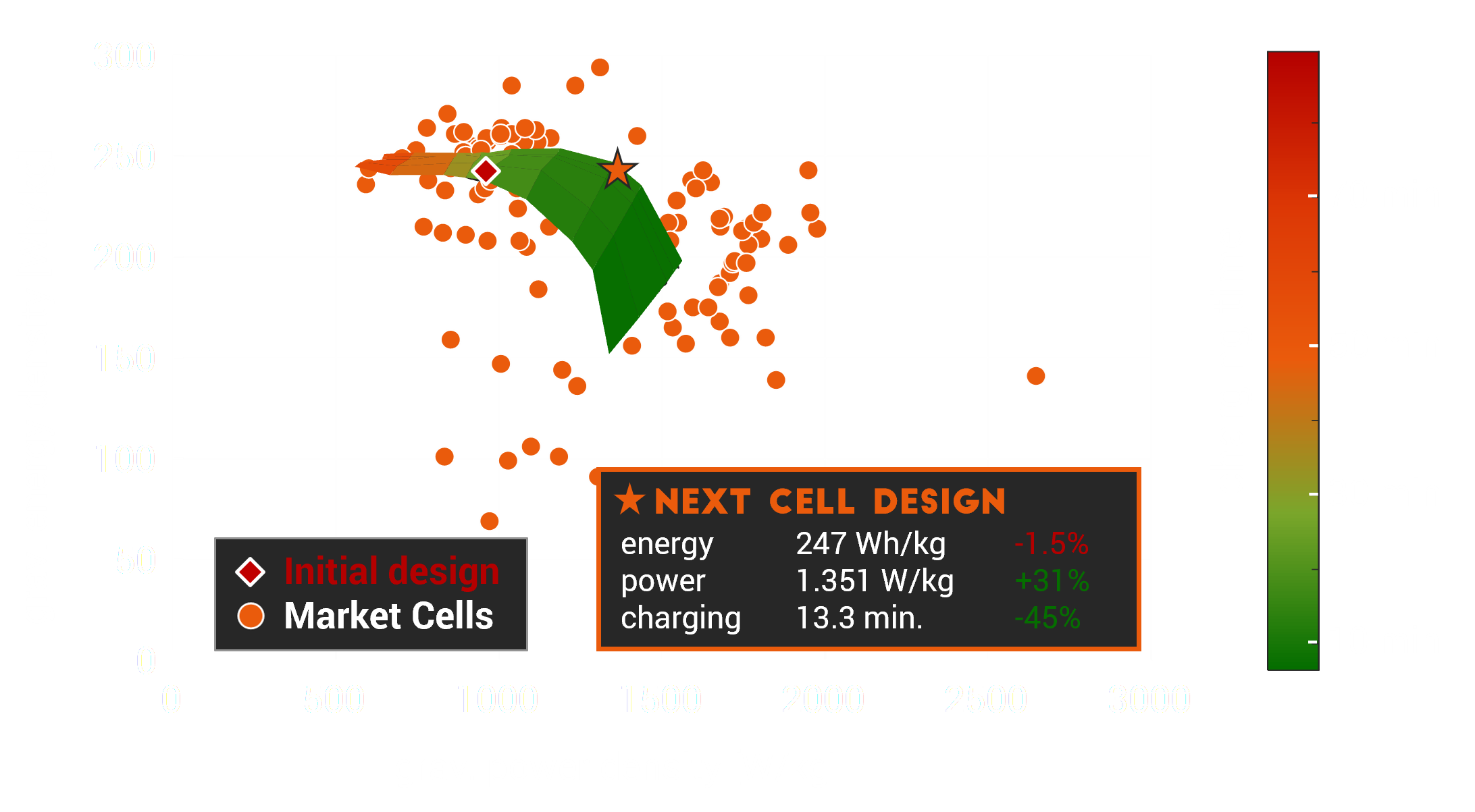
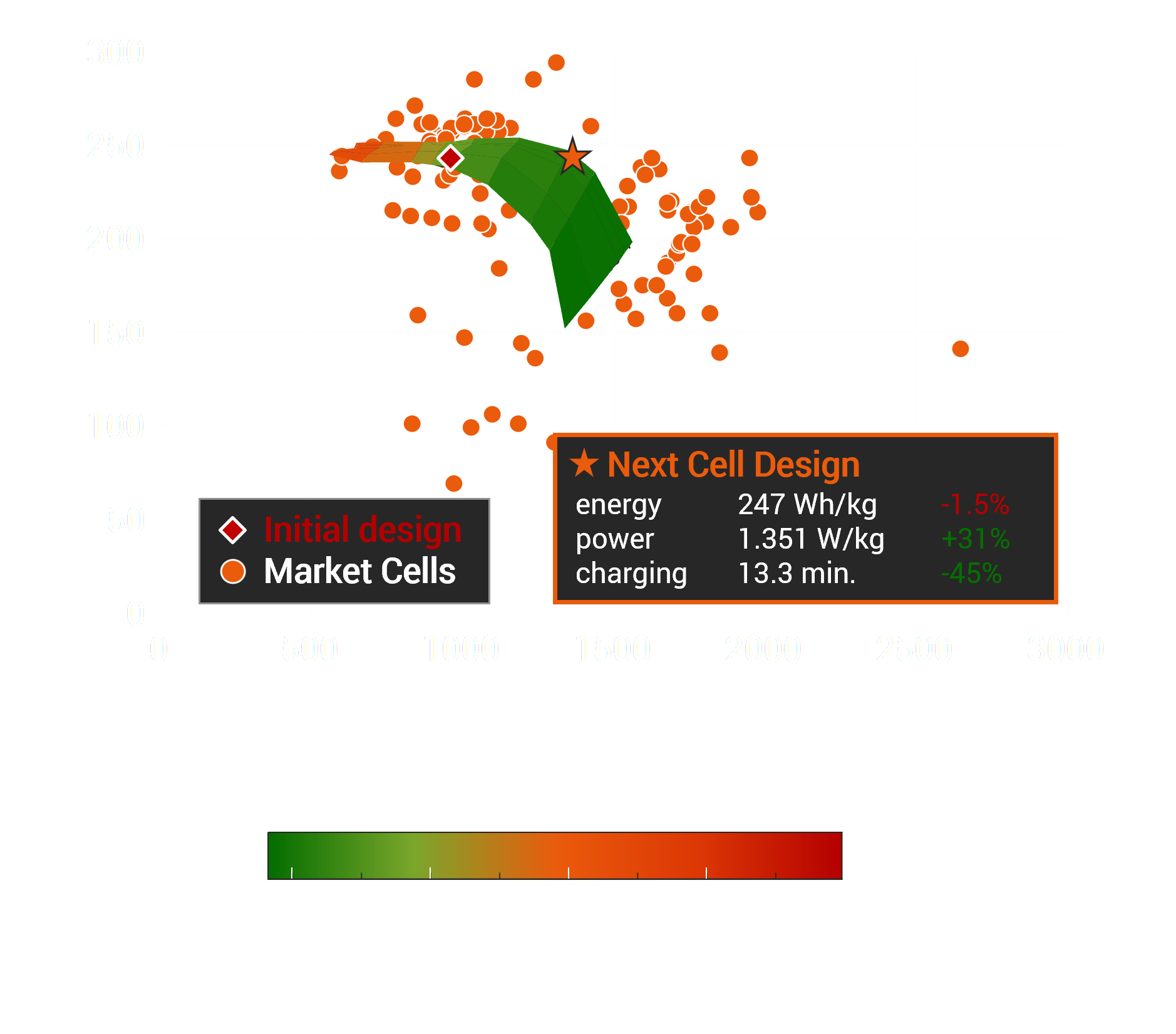
The underlying idea is to never start from scratch but with your latest cell, electrode, electrolyte or material. First, we create a physical model for you – the most accurate available, guaranteed – and integrate it into the Batemo Cell Designer. Using the tool, you vary battery cell design parameters and predict the dynamic performance under all conditions. This is how you quantify and understand the link between cell design changes and your performance targets. Overall, you maximize your cell technology and build better battery cells with less resources a lot faster.

Fast

Physical

Accurate
-
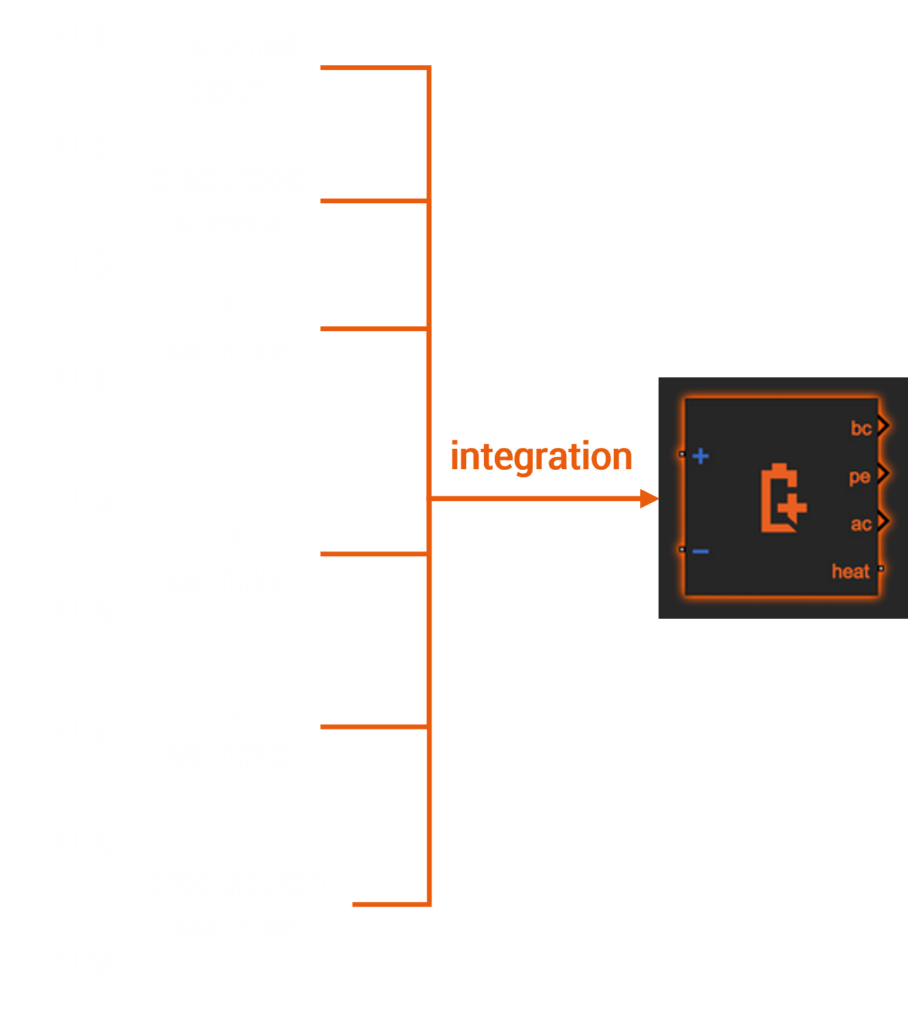
We integrate the model of your cell into the
Batemo Cell Designer. -
You perform a simulation study using the Batemo Cell Designer to predict your performance targets under meaningful cell design parameter variations.
- Example cell design parameters: cell size, housing type, tabs, current collectors, loadings, particle sizes, micro-structures and many more.
- Example targets: energy, power, charging time, aging, cost, safety and many more.
-
Build the next prototype and validate!
-
Iterate through the steps 1 to 3 until you reach your targets.
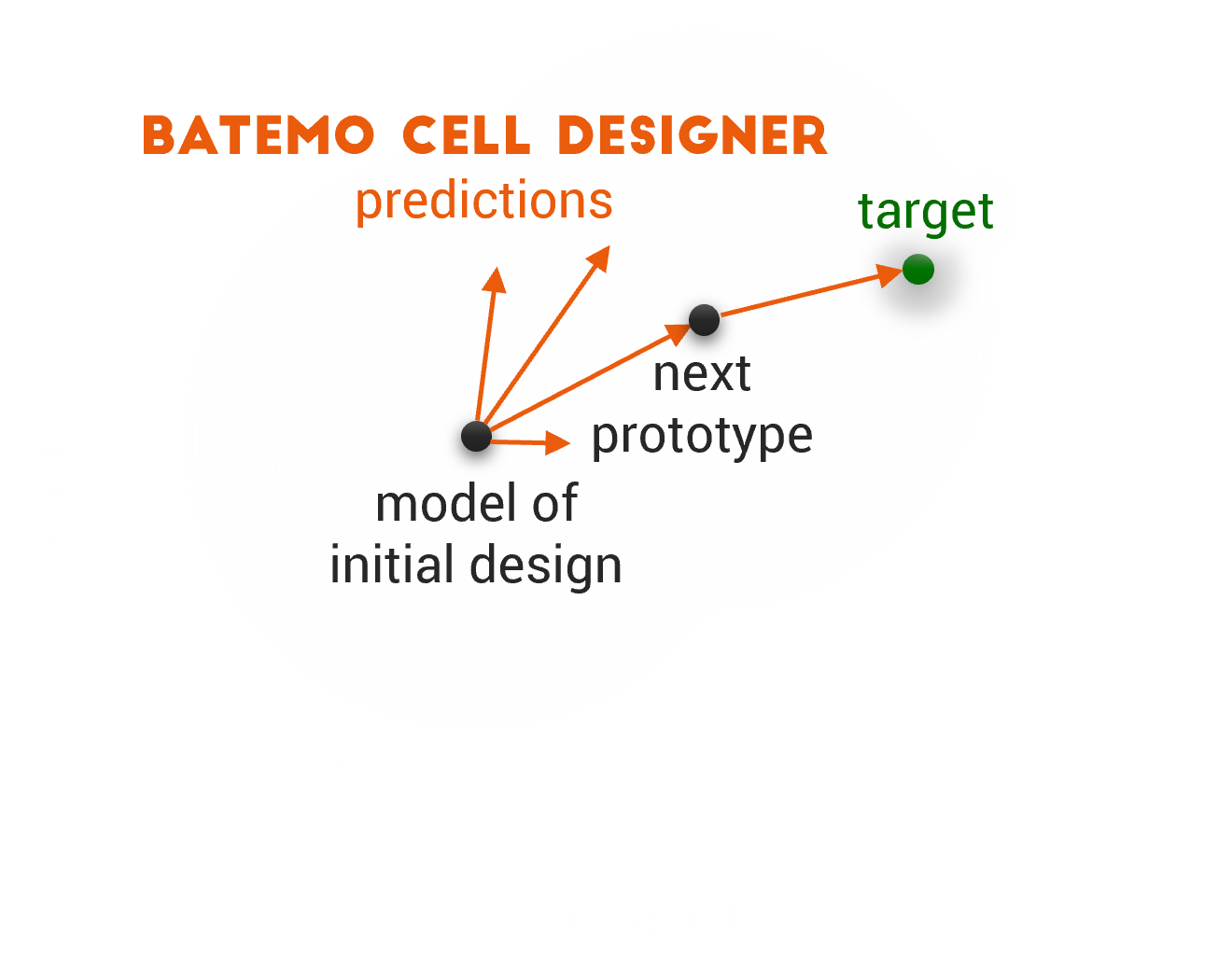
The effectiveness of the Batemo Cell Designer comes from the fact that the entry can be anywhere along the technology readiness levels (TRL). You can start with material data sheets or coated electrodes. If you have a single-layer A-sample that is great, but you can also go in later in the development process. The Batemo Cell Designer predicts whatever exit point you choose: You can upscale virtually from sheets to A-samples but also to final size production samples. That is why the tool is used along the full chain: by material producers, cell manufacturers and OEMs.

integration
Advantages

Better
Faster

Lower cost