Batemo Cell Designer
Battery cell design software that starts from your latest cell
The Batemo Cell Designer is software for battery cell design. It starts from a physical model of your latest cell, electrode, electrolyte or material. You vary the cell design parameters and predict the dynamic performance under all conditions.
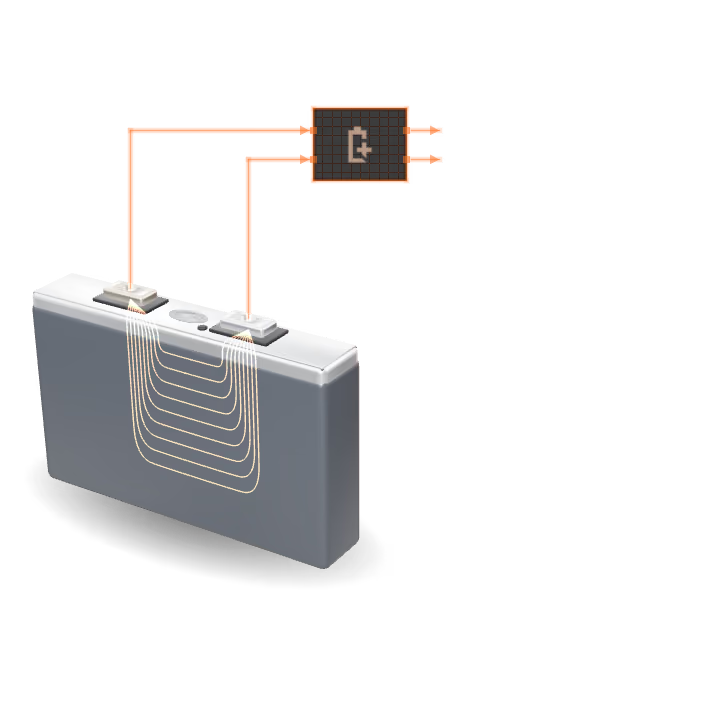
1/6We integrate the model of your cell into the Batemo Cell Designer.
2/6You vary the cell design parameters and predict the dynamic performance under all conditions.
3/6Example parameters: cell size, housing type, tabs, current collectors, loadings, particle sizes and micro-structures.
4/6Every design variant runs as a physics-based simulation of your cell.
5/6Finding the best cell design takes thousands of simulations.
6/6You find the optimal cell design in the complex, nonlinear battery design space.
What the Batemo Cell Designer is built on.
The Batemo Cell Designer combines Batemo's modeling technology with a design methodology. Every design variant runs as a physics-based simulation of your cell. Together with Batemo, your cell development becomes a controllable process with a predictable timeline.
It rests on the experience of having opened and modeled hundreds of battery cells. From this work, Batemo has unambiguous sets of equations and parameters. That is why we know our models are valid and separate the physical, chemical and thermodynamic processes correctly. This is the foundation a model needs before you can design cells with it.
Measured vs. Batemo Cell Model
voltage / V
capacity / Ah
- 0.21 A
- 2.13 A
- 8.51 A
- 17.02 A
- 25.53 A
0.9%
voltage deviation of the model, RMS over all validation tests
- Fast
- Finding the best cell design takes thousands of simulations. The Batemo Cell Designer runs in a full automation backend. Each simulation takes seconds.
- Physical
- A design study needs a model that describes all relevant electrical, chemical, thermal and physical processes inside the cell. The Batemo Cell Designer builds on Batemo's own modeling technology, which describes these processes.
- Accurate
- The Batemo Cell Designer builds on the Batemo Cell Model. We show its validity with extensive measurements. If you can show us another battery cell model that is more accurate, we will refund your money.
How a cell design study with the Batemo Cell Designer works.
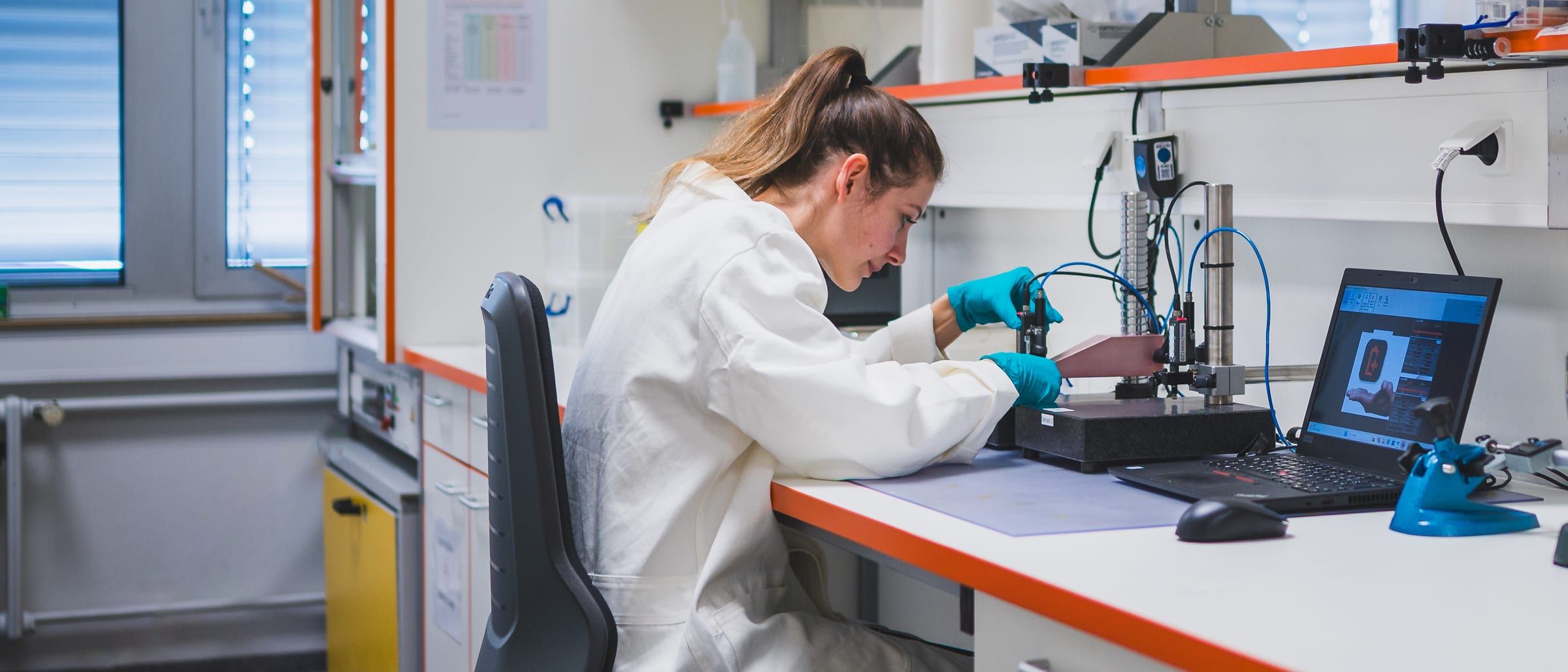
A cell design study with the Batemo Cell Designer combines simulation, prototyping and testing in four steps. You never start from scratch. You can enter at any technology readiness level (TRL): with material data sheets, with coated electrodes, with a single-layer A-sample or later in development.
The Batemo Cell Designer predicts the exit point you choose, from A-samples up to final-size production samples. That is why material producers, cell manufacturers and OEMs use it.
Integrate
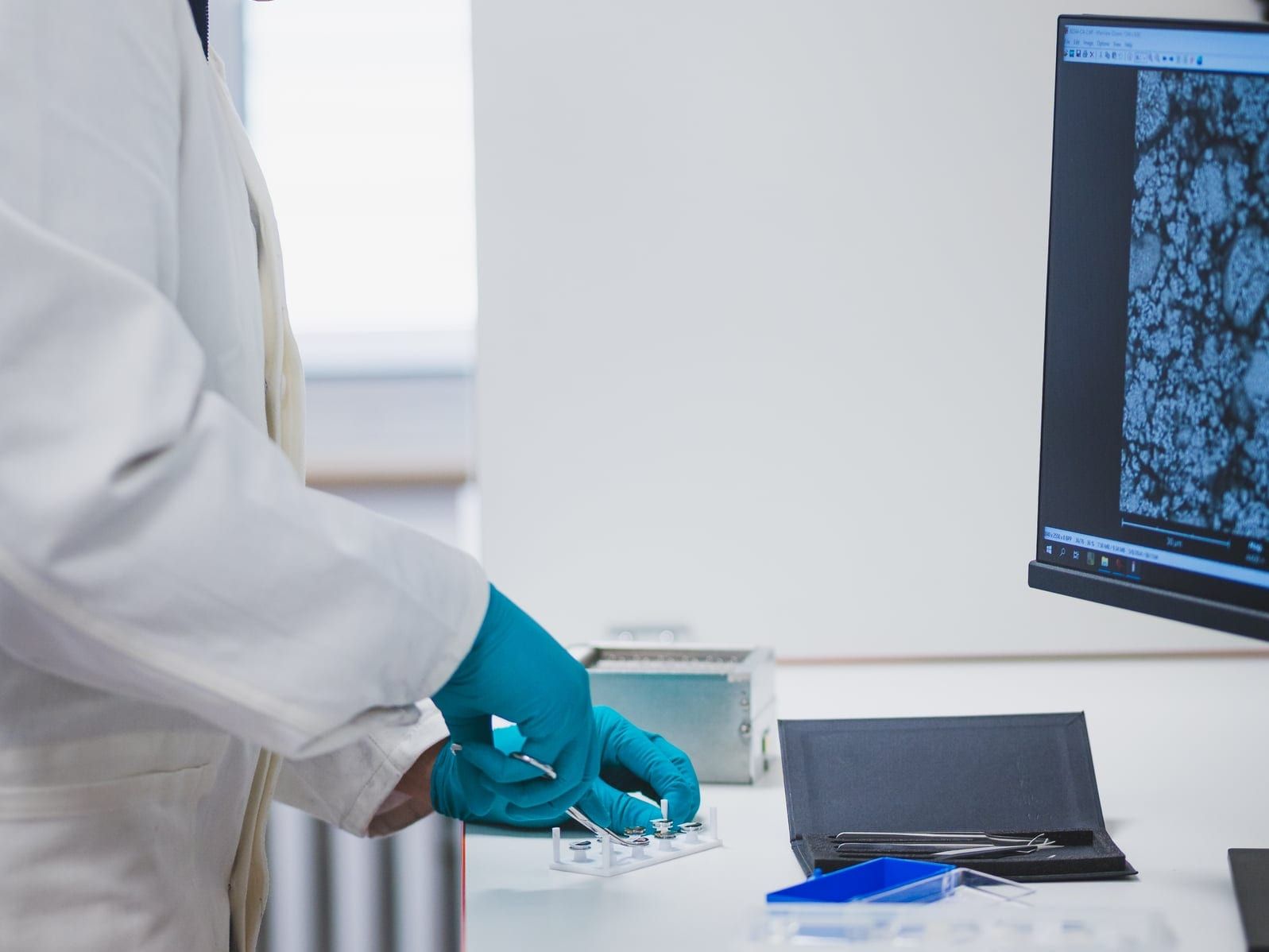
We integrate the model of your cell into the Batemo Cell Designer.
Simulate
You run a simulation study and predict your performance targets for meaningful variations of the cell design parameters. Example parameters: cell size, housing type, tabs, current collectors, loadings, particle sizes and micro-structures. Example targets: energy, power, charging time, aging, cost and safety.
Build
You build the next prototype and validate it.
Iterate
You repeat steps 1 to 3 until you reach your targets.
Integration of the Batemo Cell Designer in MATLAB Simulink and Simscape.
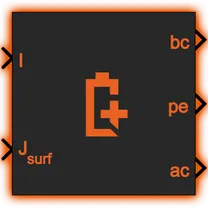
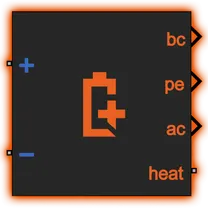
Batemo builds the Batemo Cell Designer for the MATLAB simulation environment. There you build models, configure simulations, automate studies and process and visualize the data. Like the real cell, the Batemo Cell Designer has an electrical and a thermal interface.
You set the initial conditions in a graphical parameter interface. Then you supply the electrical and thermal boundary conditions and run the simulation. Everything you can do with the real cell, you can do with the Batemo Cell Designer in simulation.
 MATLAB Simulink
 MATLAB Simscape
Internal quantities
Beyond what you can measure in the laboratory, the Batemo Cell Designer calculates internal cell quantities: inner temperatures, electrochemical electrode potentials and which internal processes inside the cell dominate the losses.
Technical onboarding
We are there for you from the first day. Batemo Support works with your team until the model runs in your environment and creates value in your daily work. Afterwards you work on your own and keep permanent support from Batemo.
First study by Batemo Engineering
Batemo Engineering can run your first cell design study. In this initial project, we identify the cell design that reaches your targets. You receive all models, scripts and data and can take over at any time.
What simulation-based cell development with the Batemo Cell Designer changes.
With the Batemo Cell Designer, your battery cell development becomes simulation-based. In one published study, Batemo started from the design of a real cell and varied its design parameters against gravimetric energy density, gravimetric power density and charging time. The next prototype design kept about the same energy density.
Its power density rose by about 30 % and its charging time was almost cut in half.
- Starting cell255 Wh/kg · 1,945 W/kg
- Design variants
- Design target
- 342 more sample cells
Better
You find the optimal cell design in the complex, nonlinear battery design space. You improve your key performance targets and differentiate your cell from competitors.
Faster
You move towards your performance targets along the best path. This shortens the time to market of your cell technology.
Lower cost
Your development becomes more efficient. You save expenses on prototyping, testing and engineering time.
Frequently asked questions
What is the Batemo Cell Designer?
The Batemo Cell Designer is battery cell design software from Batemo. It is built on the same modeling technology as the Batemo Cell Model and starts from a Batemo Cell Model of your latest cell, electrode, electrolyte or material. You vary cell design parameters, for example cell size, tabs, loadings, materials or the electrolyte, and predict the dynamic performance under all conditions. This shows how a design change affects your targets before you build the next prototype: energy, power and charging time, to name just three of many.
Which cell design parameters can you vary with the Batemo Cell Designer?
You can vary cell size, housing type, tabs, current collectors, loadings, particle sizes, micro-structures and more. For each variant, the Batemo Cell Designer predicts your targets, for example energy, power, charging time, aging, cost and safety. Finding the best design takes thousands of simulations, so the tool runs in a full automation backend and each simulation takes seconds.
Do I need a finished cell to start a cell design study?
No. You can start at any technology readiness level: with material data sheets, coated electrodes, a single-layer A-sample or a later sample. Together with you, Batemo identifies the best entry point to get the best possible results. The Batemo Cell Designer predicts the exit point you choose, from A-samples up to final-size production samples. Each study combines simulation, prototyping and testing: you simulate, build the next prototype, validate it and repeat until you reach your targets.
How accurate is the Batemo Cell Designer?
The starting point is the Batemo Cell Model of your cell, which Batemo validates with extensive measurements and for which the guarantee applies. The further you move away from it with the Batemo Cell Designer, the more predictive and therefore potentially less accurate the results become. The Batemo Cell Designer therefore gives a confidence measure that tells you how reliable the simulation results are. With it, you decide exactly when to secure the next step with another prototype.
Which software does the Batemo Cell Designer run in?
The Batemo Cell Designer runs in the MATLAB simulation environment, in MATLAB Simulink and MATLAB Simscape. There you build models, configure simulations, automate studies and process and visualize the results. Like the real cell, the Batemo Cell Designer has an electrical and a thermal interface. It also calculates inner temperatures, electrochemical electrode potentials and which internal processes inside the cell dominate the losses.
Start from your question, not from our product names.
Seven things Batemo delivers. Which one you need depends entirely on what you are trying to find out.
Which cells should I even be looking at?
Measured behavior of every cell in the library, side by side — including what the public Explorer does not show.
Batemo Insights
How will this cell behave in my system?
A physical simulation model of the cell that runs in your own environment, under conditions you have never tested.
Batemo Cell Model
What did this cell actually do on the bench?
The full experimental characterization across the operating range, as measured — plus the viewer to read it.
Batemo Cell Data
A teardown report: materials, internal construction and safety-relevant findings, without opening a cell yourself.
Batemo Cell Report
Where inside the cell does it get hot?
A spatially resolved model of a sub-volume — local distributions the one-dimensional cell model averages out.
Batemo Cube Model
What happens if I change the cell itself?
Vary design parameters of an existing cell and see the consequence before anyone builds a sample.
Batemo Cell Designer · you are here
How does this scale to a module and a pack?
From cell to pack: cooling, mechanics and cost weighed against each other in simulation.
Batemo Pack Designer
Talk to an engineer who knows the models.
They know the Batemo Cell Designer, how it is applied, and how our customers design their cells with it.
Or start with the measurements — explore the public Batemo Cell Explorer →