
01 — Accurate
We measure real battery cells and turn them into physics-based models.
Fast. Physical. Accurate.
From cell selection to system validation: develop faster, with less risk – and build better batteries that charge faster and deliver more power.
02 — Physical
Every measured cell becomes a digital battery – as data or as a model.
Our lab turns real cells into digital batteries: measured data across the full operating range, and physical models that predict what was never measured. You work with the real behavior of a cell before a single sample is on your desk – without waiting for test benches.
03 — Fast
Battery decisions in days instead of months.
Engineering teams use Batemo across their entire development: choosing the right cell, pushing charging and power to the physical limits, sizing packs and cooling, developing and testing BMS functions before hardware exists, and validating the system. Every question answered in simulation is a test loop you no longer have to run.
04 — Applied
Which battery question is holding up your project?
Describe your application. An engineer reads your question.
So you decide with data, not a guess.
Trusted by more than 200 companies worldwide – from power tools to motorsport, from cell manufacturers to automotive OEMs.
“Batemo cell models offer an unrivaled prediction accuracy within the full application range of power tools: from flash lights to angle grinders.”
“With the integration of Batemo Cell Models, our battery pack development for high-quality power tools has become faster and more efficient.”
“Batemo Cell Models provide deep insights into cell behavior, helping us optimize performance, efficiency and lifespan of our battery systems.”
“Together with Batemo we pushed fast-charging to a whole other level.”
“Straight-forward integration, easy handling… Batemo Cells significantly speeds up our battery system development.”
“Batemo accelerates our development of battery systems for ultra high power charging.”
“Batemo Cell Models have become a valuable tool across different phases of our motorbike battery development, supporting both cell-level evaluation and later-stage system verification.”
“Batemo brings their passion for accurate battery modelling to help guide the development of our next generation cells.”
“Together with Batemo we are working to reduce cell aging and extent the lifetime of our products.”
“It was great working with Batemo to improve the pack power and cooling of our high performance applications.”
“Electrifying aviation requires the best cell technologies that the industry has to offer. Working with Batemo has helped us stay at the cutting edge of this rapidly evolving market.”
“Batemo's physical battery models allow us to quickly compare with confidence custom and standard library cells, across complex duty cycles and conditions.”
“Batemo Cells help accelerate the development and sign-off of our high performance battery systems across a range of business applications including motorsport electrification.”
“Batemo Cell Models complement KREISEL’s model-based engineering with battery virtual prototyping, thermal control, and fast-charging for off-highway and marine applications.”
 Mercedes-AMG

Measured in our lab. Signed off in theirs.
Batemo is a battery software and engineering company in Karlsruhe, Germany, founded in 2017. It measures commercial battery cells and early prototypes (A- and B-samples) on its own test benches, opens them in an argon glovebox, and turns them into physics-based models that are validated against the measurement. Engineering teams use the free Batemo Cell Explorer, the Batemo Insights platform and the cell models to select cells and develop better battery systems, faster and with less risk: packs that charge faster, are cooled better and deliver more peak power.
The numbers behind fast, physical, accurate.
FAST
6months
earlier start of production in a power-tool program
Make battery decisions in days instead of months.
virtual prototypes instead of build-and-test loops · one power-tool customer program
PHYSICAL
196
data fields per cell, from our own lab
Physics-based battery engineering.
curves, values and teardown findings · 343 cells
ACCURATE
0.8%
median model deviation — measured and validated, not promised
Engineering decisions you can trust.
Across 198 validated cells. If you can show us another battery cell model that is more accurate, we will refund your money.
Every cell we measured, on one chart.
Each point is a cell we measured ourselves, placed by specific energy, specific peak power and how much of that peak it can sustain. Behind every point is far more data than this chart shows. The library keeps growing with the cells the market uses, and you can send us a cell: if it is relevant to the market, we add it.
Form factor · select to highlight
- Specific energy
- – Wh/kg
- Specific power
- – W/kg
- Continuous / peak
- – %
- Energy density
- – Wh/L
- Energy
- – Wh
Five steps from a measured cell to a better battery.
From the test bench to your decision — each step builds on the one before.
Discuss your project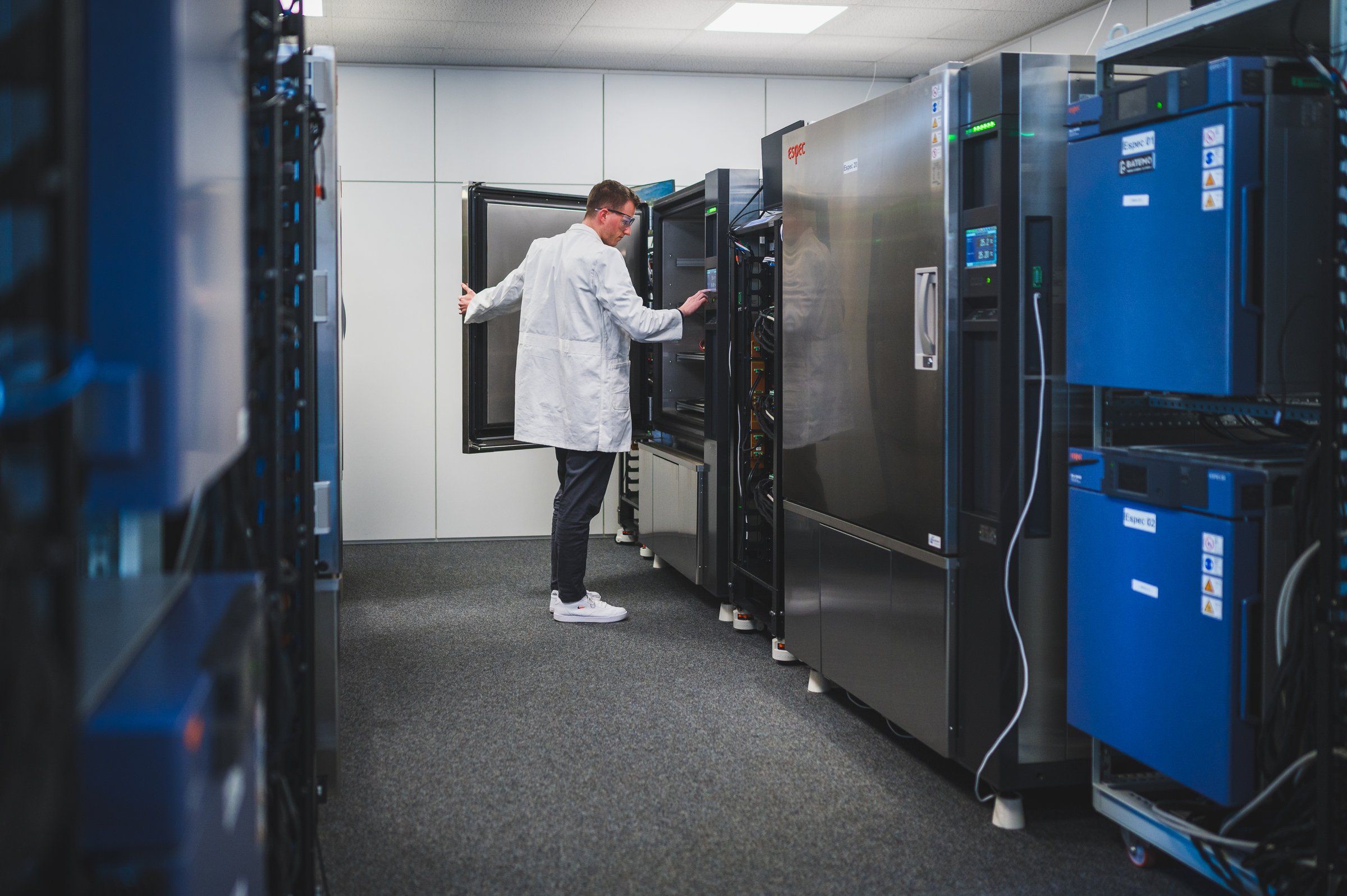
Measured on our own benches
Real cells from the market, measured in the Batemo lab across their full operating range.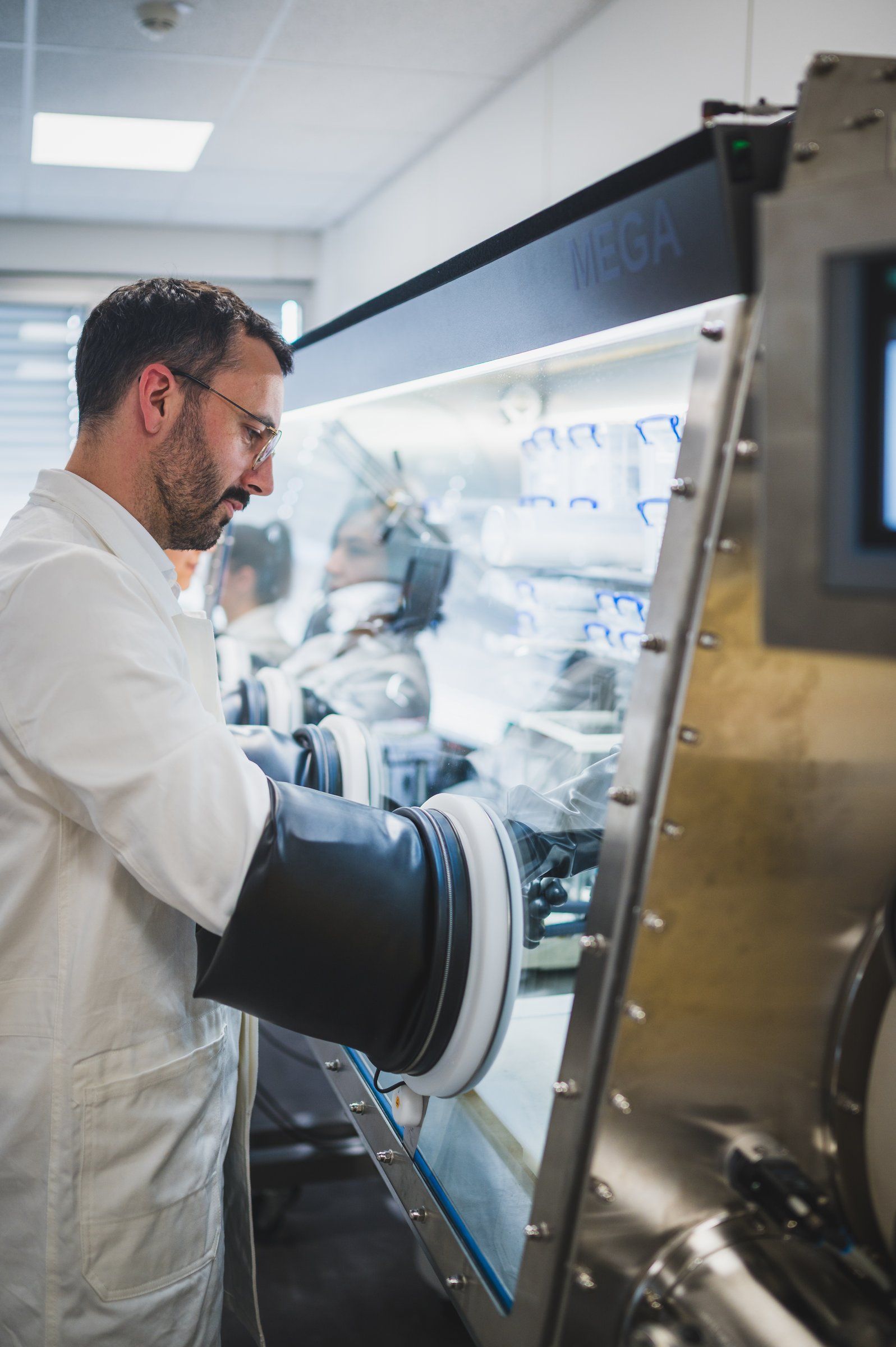
Physical and validated
Teardown, chemistry and microstructure define the model; validation against measurement proves it.
Decide earlier
Select cells and evaluate designs before ordering samples or building prototypes.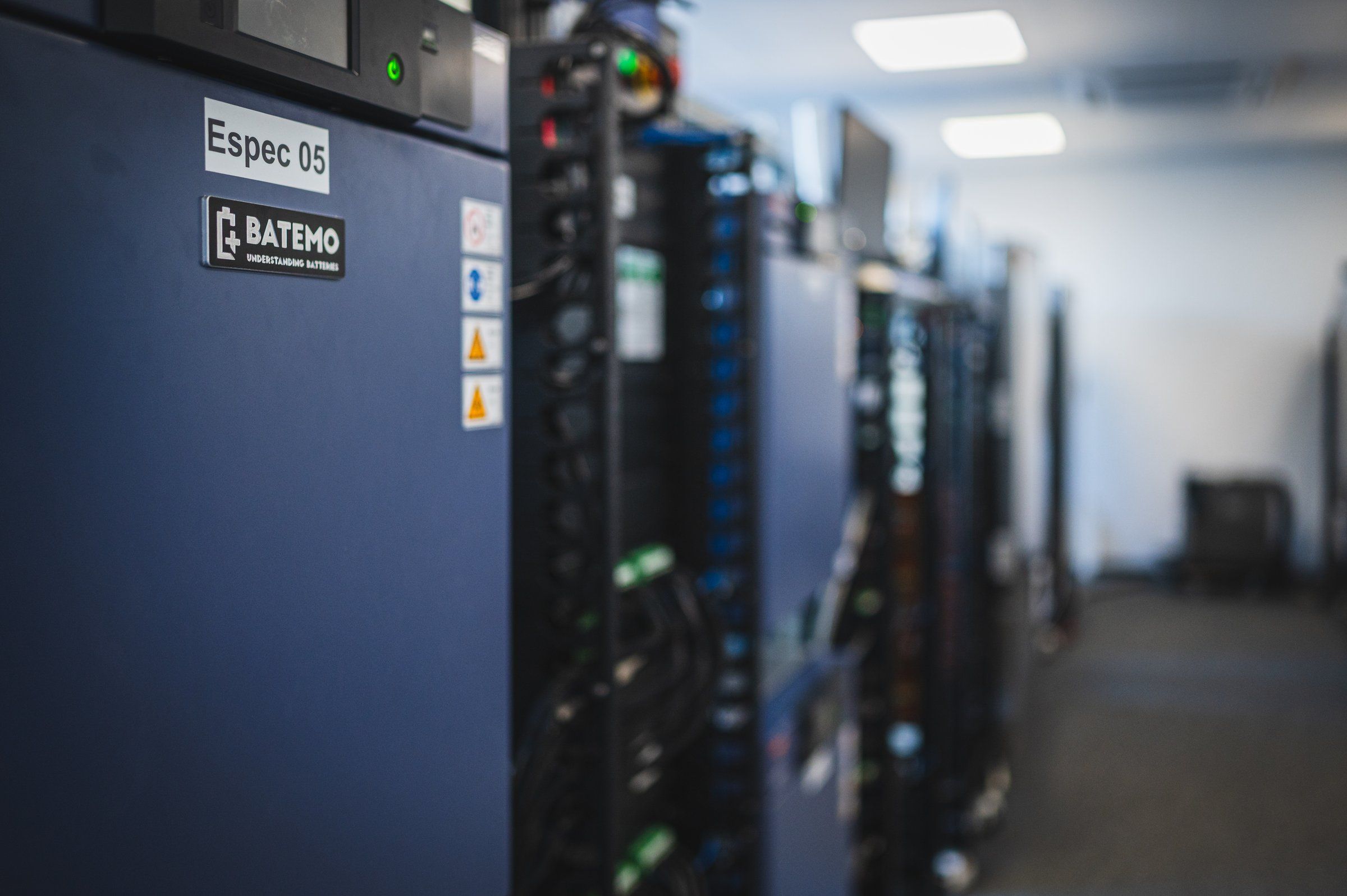
Go to the limit
Charging, peak power and thermal behavior designed right up to the physical limits of the cell.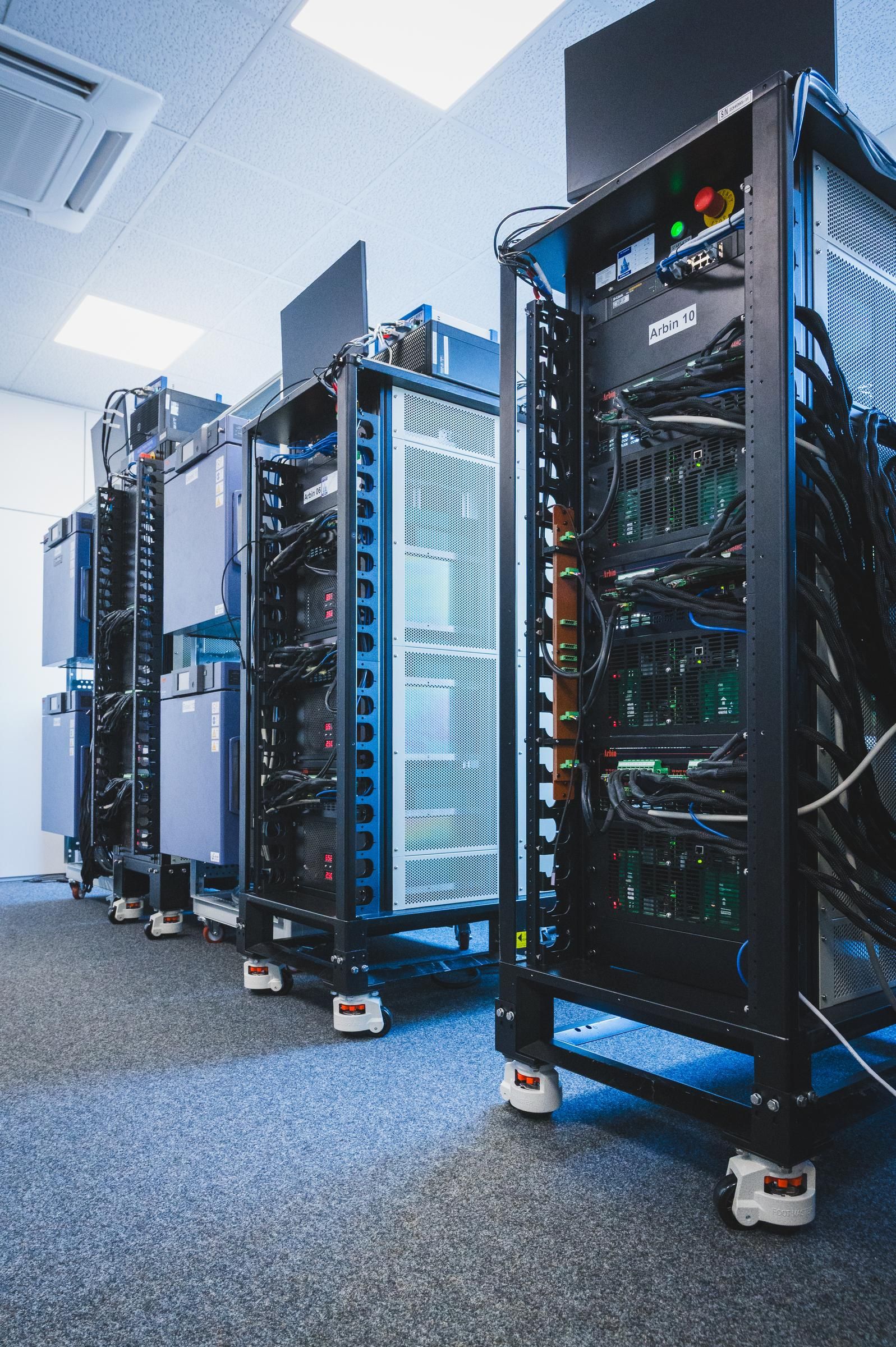
Validate virtually
Develop and test BMS functions and system behavior in simulation – before hardware exists.
Start from your own problem.
Every solution builds on the same measured cells and the engineers behind them.
- Cell selectionAhUsable capacity at the application currentTodayDatasheets cannot be compared. Every manufacturer measures under its own conditions.With BatemoCompare candidates measured the same way – before ordering a single sample.0 days until you can compare
- System optimizationVTerminal voltage under loadTodayPack behavior is only known once the pack is built.With BatemoSee peak power, derating and heat of the pack before it is built.+20 % peak power in one project
- BMS development%State-of-charge estimation errorTodayAlgorithms are tuned late, on hardware.With BatemoDevelop and test estimators against a validated model – from MiL to HiL.10× lower error probability in BMS software
- Cell designmAh/cm²Areal capacityTodayEvery design variant means another prototype cell.With BatemoEvaluate variants virtually and build only the best one.Weeks instead of months to a cell design
- Lifetime%Capacity retentionTodayAging tests take months and block test benches.With BatemoSeparate aging mechanisms physically and extrapolate from shorter tests.Sign-off 3–4 months earlier in projects
- Fast chargingVAnode surface potentialTodayCharging profiles are found test by test, with conservative margins.With BatemoCharge right up to the cell's physical limit – lithium plating visible in simulation, under 15 minutes without aging risk.Around 20 % shorter charging time
Six questions engineers ask us first.
What does Batemo do?
Batemo digitizes battery cells, with models and with data. Batemo measures both commercial battery cells and early prototypes (A- and B-samples) on its own test benches in Karlsruhe, Germany. From these measurements it creates measured cell data and physics-based models that are validated against the measurement. Engineering teams use the free Batemo Cell Explorer, Batemo Insights and the Batemo Cell Models to select cells and develop better battery systems, faster and with less risk: packs that charge faster, are cooled better and deliver more peak power.
What is a physics-based battery cell model, and how does it differ from an equivalent-circuit model?
A physics-based model solves the electrochemistry, thermodynamics, transport and heat inside the cell. It is not a curve fit: it describes the processes that actually take place in the cell. An equivalent-circuit model fits resistors and capacitors to the terminal voltage and drifts outside the operating points it was fitted to. Batemo models are parameterized from measurements in Batemo’s own lab and validated there as well.
Where does the data in the Batemo Cell Explorer come from?
Every cell was measured by Batemo in Karlsruhe: discharged from 100 % state of charge at 25 °C in a climate chamber under free convection. The public values are capacity, current, power, energy density, format and mass — lab-measured, not datasheet figures, and comparable across every cell.
Is the Batemo Cell Explorer free, and what does Batemo Insights add?
The Batemo Cell Explorer is free and needs no account. Batemo Insights is the paid platform with all 196 data fields per cell, including the impedance spectrum at 25 °C, internal resistance, heat generation and capacity loss after formation. It also holds the teardown findings: which materials and which chemistry a cell contains. But Insights is more than more data: it prepares the data for cell selection and offers dedicated views and analyses that answer specific questions, for example technological comparisons like sodium-ion versus LFP.
How accurate are Batemo Cell Models?
Batemo backs its models with a guarantee: if you can show us another battery cell model that is more accurate, we will refund your money. Accuracy is computed from validation tests that cover the operating range of the cell as specified by its manufacturer. We publish the accuracy of every model on its own cell page on this website.
Which simulation tools do Batemo models run in?
Batemo Cell Models have built-in integration for MATLAB Simulink, MATLAB Simscape, Simcenter Amesim, AVL CRUISE M, AVL FIRE M, Elements and Hexagon Cradle CFD, and as an FMU they run in all common simulation tools.
Bring us the decision you are stuck on.
Two ways in, the same measured data underneath. Explore the library yourself, or talk to the engineers behind the measurements.