CBAK26700LT

Measured at Batemo: the CBAK 26700LT delivers 142 Wh/kg energy density and sustains 39 W continuous power in a 26xxx 26700 cell.

Opened, measured and modelled at Batemo in Karlsruhe, Germany · 196 measured parameters per cell · not datasheet values

Available asReportData

Dimensions
26.1 x 70mm
Mass
91.0 g
Internal resistance
Insights only — measured at Batemo, available in Batemo Insights
Spread across a measured batch
Insights only — measured at Batemo, available in Batemo Insights
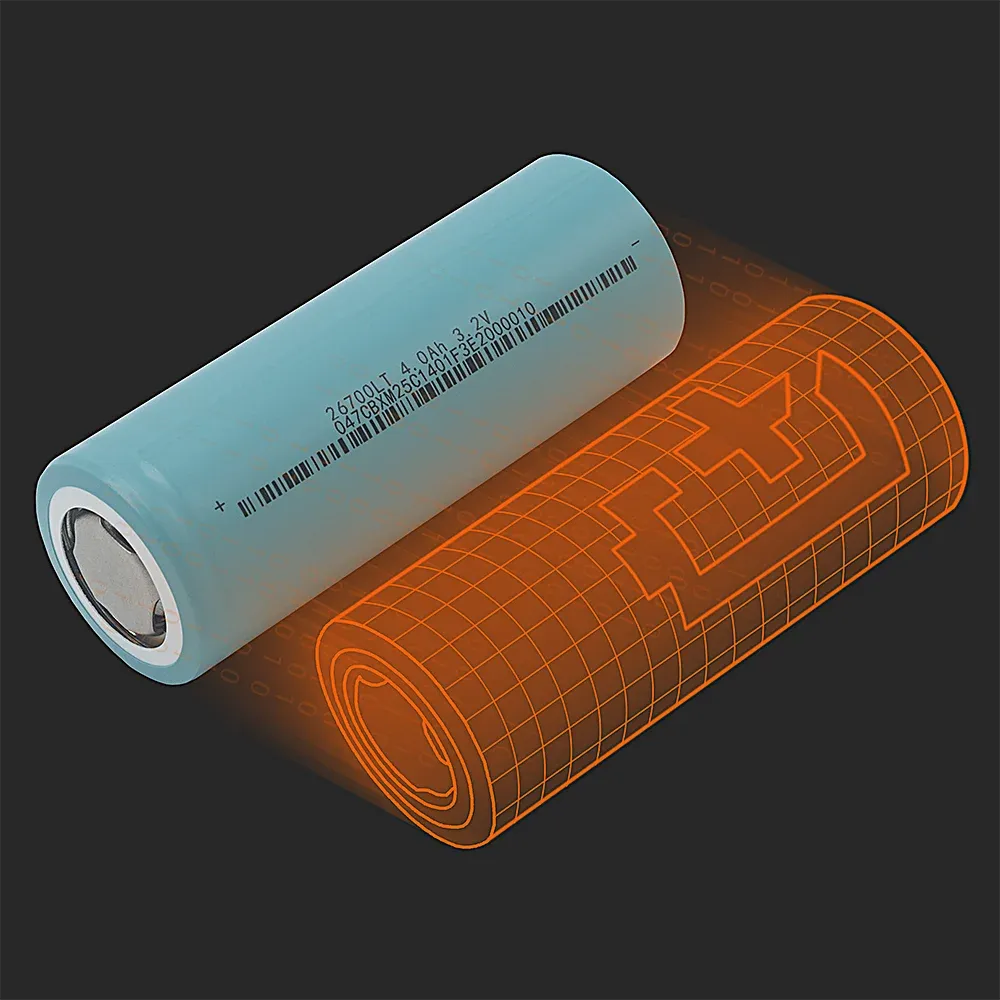
CBAK 26700LT: the physical cell next to its Batemo model
The measured cell and its physical model
CBAK 26700LT
142 Wh/kg · 816 W/kg
04,0008,0000250500power, W/kg →energy, Wh/kg →

this cell342 more sample cells

Show all 17 measured values — and 3 more behind the lock

ENERGY

Gravimetric energy (C/10)
?

The energy exchanged during the C/10 discharge described under Capacity, divided by the cell’s mass or volume. Measured directly, not calculated from the nominal capacity. Full definition

142Wh/kg
Volumetric energy (C/10)
?

The energy exchanged during the C/10 discharge described under Capacity, divided by the cell’s mass or volume. Measured directly, not calculated from the nominal capacity. Full definition

344Wh/L
Absolute energy (C/10)
?

The energy exchanged during the C/10 discharge described under Capacity, in watt-hours. Measured directly, not calculated from the nominal capacity. Full definition

12.91Wh

POWER

Gravimetric power, peak
?

The peak or continuous power above, divided by the cell’s mass or volume. Not a datasheet rating — the current behind it was measured on Batemo’s own test benches. Full definition

816W/kg
Gravimetric power, continuous
?

The peak or continuous power above, divided by the cell’s mass or volume. Not a datasheet rating — the current behind it was measured on Batemo’s own test benches. Full definition

434W/kg
Volumetric power, peak
?

The peak or continuous power above, divided by the cell’s mass or volume. Not a datasheet rating — the current behind it was measured on Batemo’s own test benches. Full definition

1,981W/L
Volumetric power, continuous
?

The peak or continuous power above, divided by the cell’s mass or volume. Not a datasheet rating — the current behind it was measured on Batemo’s own test benches. Full definition

1,054W/L
Absolute power, peak
?

Peak figures come from the highest current Batemo measured the cell to sustain briefly; continuous figures use the lower current it can sustain without interruption. Both stop at the same 2.5 V / 80 °C condition as the discharge measurements. Full definition

74.2W
Absolute power, continuous
?

Peak figures come from the highest current Batemo measured the cell to sustain briefly; continuous figures use the lower current it can sustain without interruption. Both stop at the same 2.5 V / 80 °C condition as the discharge measurements. Full definition

39.5W

CURRENT

Absolute current, peak
?

The highest constant discharge current Batemo measured the cell to sustain briefly, before the same 2.5 V / 80 °C stop condition applies. Full definition

26.8A
Absolute current, continuous
?

The highest constant discharge current Batemo measured the cell to sustain continuously, before the same 2.5 V / 80 °C stop condition applies. Full definition

13.4A

PHYSICAL

Dimensions
?

Measured on the physical cell at Batemo, in Karlsruhe, Germany — not taken from the manufacturer's drawing. Volume is derived from the measured capacity and its volumetric density, not measured with a caliper. Full definition

26.1 x 70mm
Mass
?

Measured on the physical cell at Batemo, in Karlsruhe, Germany — not taken from the manufacturer's drawing. Volume is derived from the measured capacity and its volumetric density, not measured with a caliper. Full definition

91.0g
Volume
?

Measured on the physical cell at Batemo, in Karlsruhe, Germany — not taken from the manufacturer's drawing. Volume is derived from the measured capacity and its volumetric density, not measured with a caliper. Full definition

37.5cm³
Format
?

Measured on the physical cell at Batemo, in Karlsruhe, Germany — not taken from the manufacturer's drawing. Volume is derived from the measured capacity and its volumetric density, not measured with a caliper. Full definition

26XXX 26700

CELL

Absolute capacity, nominal
?

Discharged from a full charge at a constant C/10 current and 25 °C, until the cell reaches 2.5 V or its surface reaches 80 °C. Nominal is the value from the datasheet; measured, gravimetric and volumetric are what Batemo recorded during that discharge. Full definition

4.00Ah
Absolute capacity, measured (C/10)
?

Discharged from a full charge at a constant C/10 current and 25 °C, until the cell reaches 2.5 V or its surface reaches 80 °C. Nominal is the value from the datasheet; measured, gravimetric and volumetric are what Batemo recorded during that discharge. Full definition

3.99Ah
Mean voltage (C/10)
?

The charge-averaged voltage across the same C/10 discharge — the exchanged energy divided by the exchanged charge, not a single number picked from a curve. It is a measured mean, not the nominal voltage printed on a datasheet. Full definition

3.24V

In Batemo Insights

Impedance spectrum (EIS)
Insights only — measured at Batemo, available in Batemo Insights
Heat generation and thermal properties
Insights only — measured at Batemo, available in Batemo Insights
Capacity loss after formation
Insights only — measured at Batemo, available in Batemo Insights

What this cell does when you actually load it.

The table above gives you one capacity number. Below is what CBAK 26700LT does under load — measured on our own test bench, across many operating points and several ambient temperatures. Every cell in the library is measured under identical conditions, which is what makes them comparable at all. At 1C — the one rate measured on every cell — usable energy is 87% to 99% of what the same cell delivers at C/10.

All three panels below use the same 14 measured operating points, at 25 °C ambient.

energy

14 pts · 25 °C · lin

How much energy can it deliver?

The graph visualizes how much energy the cell can deliver when operated at different powers.

usable energy / Wh

4812020406080

discharge power / W

At 25 °C ambient, CBAK 26700LT delivers 5.8 Wh at 77 W — down from 12.9 Wh at C/10 (1.3 W).

thermal

14 pts · 25 °C · lin

How hot does it get?

The greater the thermal losses, the more the cell heats up, resulting in higher depleted power.

max. surface temperature / °C

204060020406080

discharge power / W

At 25 °C ambient, CBAK 26700LT's surface reaches 65.0 °C at 77 W — up from 26.2 °C at C/10 (1.3 W).

runtime

14 pts · 25 °C · log

How long can it deliver the power?

The more power the cell supplies, the shorter it can deliver the power.

runtime to cutoff / s (log)

100100010k100k020406080

discharge power / W

At 25 °C ambient, CBAK 26700LT runs for 5 min at 77 W — down from 9 h 58 min at C/10 (1.3 W).

The top 3 challenges you face with this cell.

Every cell is a compromise. This cell's own measurements point to three challenges you will face with it. Each one shows the number behind it and where Batemo helps you solve it.

Cell selection

Choosing the right cell

12.89Wh39W

and that is all a datasheet will tell you

Energy

second quarter of 343 cells

Continuous power

second quarter of 343 cells

the challenge

The datasheet says 4.00 Ah. But how much does it deliver in your system?

Looking at energy and power alone is not enough. Your duty cycle is neither C/10 nor 1 C, and somewhere in between the ranking between two cells can invert.

Cell selection

System optimization

Getting more from the pack

3.233V mean

this cell at C/10 — each dot a load case of an example cell

0

20

40

60

Ah/kg

C/10

1C

4C

8C

12C

datasheet

cut-off voltage

the challenge

My pack has several hundred of these. The decision is not about the cell any more — it is about the system.

An equivalent circuit fitted to a handful of measurements reproduces those points and drifts everywhere else — which is exactly where a system study goes.

System optimization

BMS development

Estimating the SOC

0–26.8A0–100% SOCup to 65°C

a BMS has to be right in every corner of this space

0

500

1000

W/kg

40 °C

25 °C

0 °C

−20 °C

hottest point

the challenge

Between 13.4 A and 26.8 A my state-of-charge estimate has to hold. Where does it get the worst?

Every percent of estimation error is paid for twice: once as range nobody uses, once as margin nobody touches.

BMS development

These three are the challenges this cell's own numbers raise. Which of them decides your product is something only your load profile can say — and that is the next question, not this one.

The Batemo Cell Model for the CBAK 26700LT is still being built.

Every cell in the library is measured before a model is built from it. The mean accuracies are published as soon as the Batemo Cell Model is finished.

What is already measured
Discharge curves
4
At rates
C/10 · 1 C · 4 C · 7 C
Ambient
25 °C

Every curve was recorded from a full state of charge, in a climate chamber under free convection. The model is built on these.

How this cell sits in the field.

Nearest by measured specific energy and power — the two axes of the Ragone map above. Not by chemistry, and not a recommendation. Other numbers, like continuous current, can still differ a lot.

The two closest cells in the library

Also close · 8.0% apart

TENPOWER IFR26700-40HE

26700 26XXX
  • Gravimetric energy146 Wh/kg+2.8%
  • Gravimetric power, peak759 W/kg-6.9%
  • Absolute current, continuous9.8 A-26.9%
  • Mass88 g-3.3%
Open cell page
This cell at the center of a map of specific energy (horizontal) and specific peak power (vertical). Same build + closest behaviour: CBAK 26650FS3, 1.5% apart. Also close: TENPOWER IFR26700-40HE, 8.0% apart.×1.25×0.80×1.25×0.80energy →power ↑5%10%

Ring percentages measure overall distance — energy and power combined. The ×-numbers on the dashed box measure just one axis: a point on that edge has that many times this cell's own specific energy or power.

  • This cell
  • Other cells, same build, in window

Same build + closest behaviour · 1.5% apart

CBAK 26650FS3

26650 26XXX
  • Gravimetric energy141 Wh/kg-0.9%
  • Gravimetric power, peak825 W/kg+1.2%
  • Absolute current, continuous12.9 A-4.3%
  • Mass85 g-7.1%
Open cell page
What nextCompare cells