HighstarNaCR46145-15PR

Measured at Batemo: the Highstar NaCR46145-15PR delivers 95 Wh/kg energy density and sustains 425 W continuous power in a 46xxx 46145 cell.

Opened, measured and modelled at Batemo in Karlsruhe, Germany · 196 measured parameters per cell · not datasheet values

Available asReportData

Dimensions
46.8 x 148.7mm
Mass
460.5 g
Internal resistance
Insights only — measured at Batemo, available in Batemo Insights
Spread across a measured batch
Insights only — measured at Batemo, available in Batemo Insights
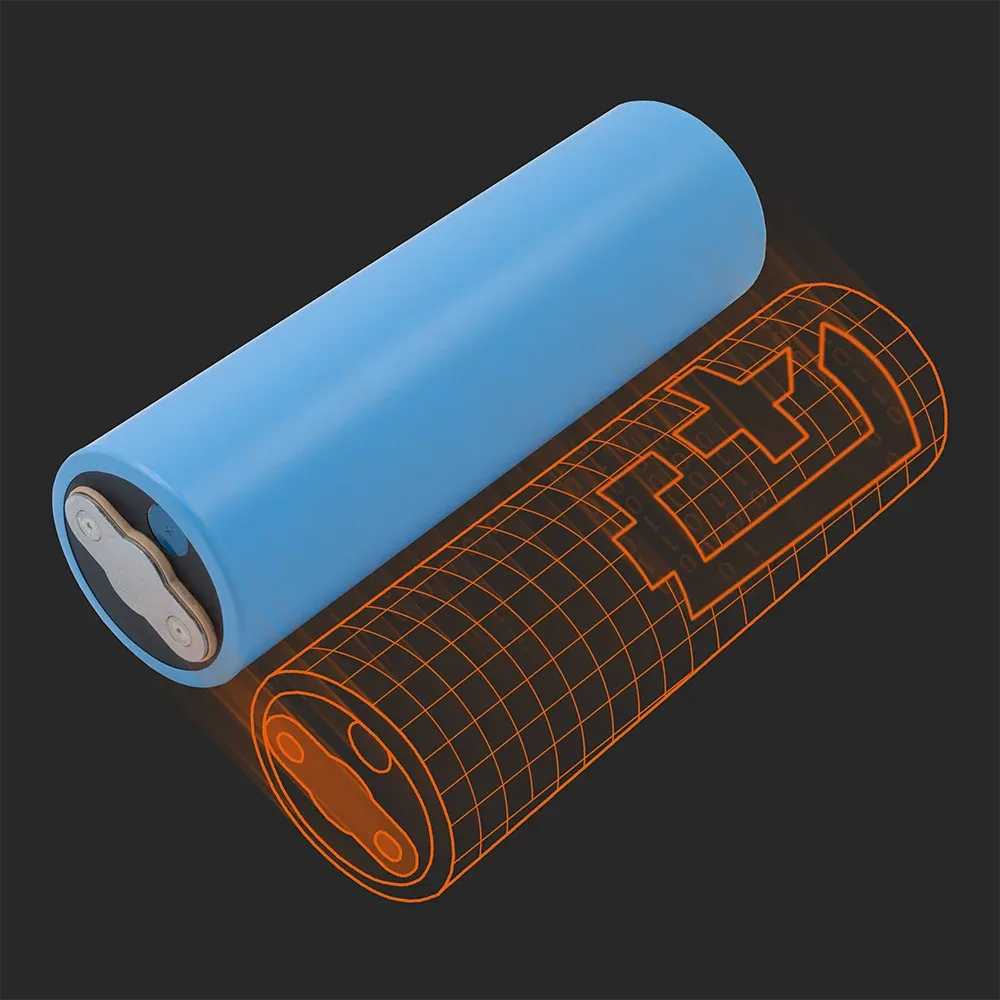
Highstar NaCR46145-15PR: the physical cell next to its Batemo model
The measured cell and its physical model
Highstar NaCR46145-15PR
95 Wh/kg · 1,120 W/kg
04,0008,0000250500power, W/kg →energy, Wh/kg →

this cell342 more sample cells

Show all 17 measured values — and 3 more behind the lock

ENERGY

Gravimetric energy (C/10)
?

The energy exchanged during the C/10 discharge described under Capacity, divided by the cell’s mass or volume. Measured directly, not calculated from the nominal capacity. Full definition

95Wh/kg
Volumetric energy (C/10)
?

The energy exchanged during the C/10 discharge described under Capacity, divided by the cell’s mass or volume. Measured directly, not calculated from the nominal capacity. Full definition

170Wh/L
Absolute energy (C/10)
?

The energy exchanged during the C/10 discharge described under Capacity, in watt-hours. Measured directly, not calculated from the nominal capacity. Full definition

43.54Wh

POWER

Gravimetric power, peak
?

The peak or continuous power above, divided by the cell’s mass or volume. Not a datasheet rating — the current behind it was measured on Batemo’s own test benches. Full definition

1,120W/kg
Gravimetric power, continuous
?

The peak or continuous power above, divided by the cell’s mass or volume. Not a datasheet rating — the current behind it was measured on Batemo’s own test benches. Full definition

922W/kg
Volumetric power, peak
?

The peak or continuous power above, divided by the cell’s mass or volume. Not a datasheet rating — the current behind it was measured on Batemo’s own test benches. Full definition

2,008W/L
Volumetric power, continuous
?

The peak or continuous power above, divided by the cell’s mass or volume. Not a datasheet rating — the current behind it was measured on Batemo’s own test benches. Full definition

1,653W/L
Absolute power, peak
?

Peak figures come from the highest current Batemo measured the cell to sustain briefly; continuous figures use the lower current it can sustain without interruption. Both stop at the same 2.5 V / 80 °C condition as the discharge measurements. Full definition

515.7W
Absolute power, continuous
?

Peak figures come from the highest current Batemo measured the cell to sustain briefly; continuous figures use the lower current it can sustain without interruption. Both stop at the same 2.5 V / 80 °C condition as the discharge measurements. Full definition

424.7W

CURRENT

Absolute current, peak
?

The highest constant discharge current Batemo measured the cell to sustain briefly, before the same 2.5 V / 80 °C stop condition applies. Full definition

198.1A
Absolute current, continuous
?

The highest constant discharge current Batemo measured the cell to sustain continuously, before the same 2.5 V / 80 °C stop condition applies. Full definition

162.5A

PHYSICAL

Dimensions
?

Measured on the physical cell at Batemo, in Karlsruhe, Germany — not taken from the manufacturer's drawing. Volume is derived from the measured capacity and its volumetric density, not measured with a caliper. Full definition

46.8 x 148.7mm
Mass
?

Measured on the physical cell at Batemo, in Karlsruhe, Germany — not taken from the manufacturer's drawing. Volume is derived from the measured capacity and its volumetric density, not measured with a caliper. Full definition

460.5g
Volume
?

Measured on the physical cell at Batemo, in Karlsruhe, Germany — not taken from the manufacturer's drawing. Volume is derived from the measured capacity and its volumetric density, not measured with a caliper. Full definition

256.9cm³
Format
?

Measured on the physical cell at Batemo, in Karlsruhe, Germany — not taken from the manufacturer's drawing. Volume is derived from the measured capacity and its volumetric density, not measured with a caliper. Full definition

46XXX 46145

CELL

Absolute capacity, nominal
?

Discharged from a full charge at a constant C/10 current and 25 °C, until the cell reaches 2.5 V or its surface reaches 80 °C. Nominal is the value from the datasheet; measured, gravimetric and volumetric are what Batemo recorded during that discharge. Full definition

15.00Ah
Absolute capacity, measured (C/10)
?

Discharged from a full charge at a constant C/10 current and 25 °C, until the cell reaches 2.5 V or its surface reaches 80 °C. Nominal is the value from the datasheet; measured, gravimetric and volumetric are what Batemo recorded during that discharge. Full definition

15.12Ah
Mean voltage (C/10)
?

The charge-averaged voltage across the same C/10 discharge — the exchanged energy divided by the exchanged charge, not a single number picked from a curve. It is a measured mean, not the nominal voltage printed on a datasheet. Full definition

2.88V

In Batemo Insights

Impedance spectrum (EIS)
Insights only — measured at Batemo, available in Batemo Insights
Heat generation and thermal properties
Insights only — measured at Batemo, available in Batemo Insights
Capacity loss after formation
Insights only — measured at Batemo, available in Batemo Insights

What this cell does when you actually load it.

The table above gives you one capacity number. Below is what Highstar NaCR46145-15PR does under load — measured on our own test bench, across many operating points and several ambient temperatures. Every cell in the library is measured under identical conditions, which is what makes them comparable at all. At 1C — the one rate measured on every cell — usable energy is 87% to 99% of what the same cell delivers at C/10.

All three panels below use the same 11 measured operating points, at 25 °C ambient.

energy

11 pts · 25 °C · lin

How much energy can it deliver?

The graph visualizes how much energy the cell can deliver when operated at different powers.

usable energy / Wh

3640440200400

discharge power / W

At 25 °C ambient, Highstar NaCR46145-15PR delivers 36.9 Wh at 449 W — down from 43.5 Wh at C/10 (4.3 W).

thermal

11 pts · 25 °C · lin

How hot does it get?

The greater the thermal losses, the more the cell heats up, resulting in higher depleted power.

max. surface temperature / °C

20304050600200400

discharge power / W

At 25 °C ambient, Highstar NaCR46145-15PR's surface reaches 55.1 °C at 449 W — up from 25.3 °C at C/10 (4.3 W).

runtime

11 pts · 25 °C · log

How long can it deliver the power?

The more power the cell supplies, the shorter it can deliver the power.

runtime to cutoff / s (log)

100100010k100k0200400

discharge power / W

At 25 °C ambient, Highstar NaCR46145-15PR runs for 5 min at 449 W — down from 10 h 05 min at C/10 (4.3 W).

The top 3 challenges you face with this cell.

Every cell is a compromise. This cell's own measurements point to three challenges you will face with it. Each one shows the number behind it and where Batemo helps you solve it.

BMS development

Estimating the SOC

0–198.1A0–100% SOCup to 60°C

a BMS has to be right in every corner of this space

0

500

1000

W/kg

40 °C

25 °C

0 °C

−20 °C

hottest point

the challenge

This cell runs anywhere between 0 A and 198.1 A. How wrong is my state of charge across that span?

Every percent of estimation error is paid for twice: once as range nobody uses, once as margin nobody touches.

BMS development

Thermal analysis

Getting the heat out

about 84mW/cm²

of heat at typical operation — 21 W in total

heat out

253 cm² of surface

the challenge

I push 425 W through each cell of my module. The sensor sits on the case. How far is it from the hot spot?

A surface temperature is not the temperature that decides. What no sensor on a finished cell can show is the temperature inside it — and the gap between the two grows exactly where it matters.

Thermal analysis

System optimization

Getting more from the pack

2.879V mean

this cell at C/10 — each dot a load case of an example cell

0

20

40

60

Ah/kg

C/10

1C

4C

8C

12C

datasheet

cut-off voltage

the challenge

My load peaks at 198.1 A against 162.5 A continuous. Does the pack dip below cut-off, or does derating bite first?

An equivalent circuit fitted to a handful of measurements reproduces those points and drifts everywhere else — which is exactly where a system study goes.

System optimization

These three are the challenges this cell's own numbers raise. Which of them decides your product is something only your load profile can say — and that is the next question, not this one.

The Batemo Cell Model for the Highstar NaCR46145-15PR is still being built.

Every cell in the library is measured before a model is built from it. The mean accuracies are published as soon as the Batemo Cell Model is finished.

What is already measured
Discharge curves
5
At rates
C/10 · 1 C · 4 C · 8 C · 11.5 C
Ambient
25 °C

Every curve was recorded from a full state of charge, in a climate chamber under free convection. The model is built on these.

How this cell sits in the field.

Nearest by measured specific energy and power — the two axes of the Ragone map above. Not by chemistry, and not a recommendation. Other numbers, like continuous current, can still differ a lot.

The two closest cells in the library

Same build · 65% apart

Highstar IFpR46145-28PR

46145 46XXX
  • Gravimetric energy154 Wh/kg+62.8%
  • Gravimetric power, peak1,239 W/kg+10.6%
  • Absolute current, continuous100.9 A-37.9%
  • Mass585 g+27.1%
Open cell page
This cell at the center of a map of specific energy (horizontal) and specific peak power (vertical). Closest behaviour: Highstar NaCR46145-15PR(2), 5.2% apart. Same build: Highstar IFpR46145-28PR, 65% apart.×3.5×0.3×3.5×0.3energy →power ↑25%50%100%

Ring percentages measure overall distance — energy and power combined. The ×-numbers on the dashed box measure just one axis: a point on that edge has that many times this cell's own specific energy or power.

  • This cell
  • Other cells, same build, in window

Closest behaviour · 5.2% apart

Highstar NaCR46145-15PR(2)

cylindrical other cylindrical
  • Gravimetric energy94 Wh/kg-0.1%
  • Gravimetric power, peak1,178 W/kg+5.2%
  • Absolute current, continuous175.3 A+7.9%
  • Mass464 g+0.7%
Open cell page

What do you need for the Highstar NaCR46145-15PR?

Ion, our battery decision assistant, joins this page after launch. Until then, these go straight to the engineers who measured this cell.

What nextCompare cells