⢠100% Consistency ā no datasheets, no estimates, only high-quality data acquisition
⢠Instant One-Click Comparisons ā find the perfect cell in seconds
⢠Unlimited Access to all cells for members
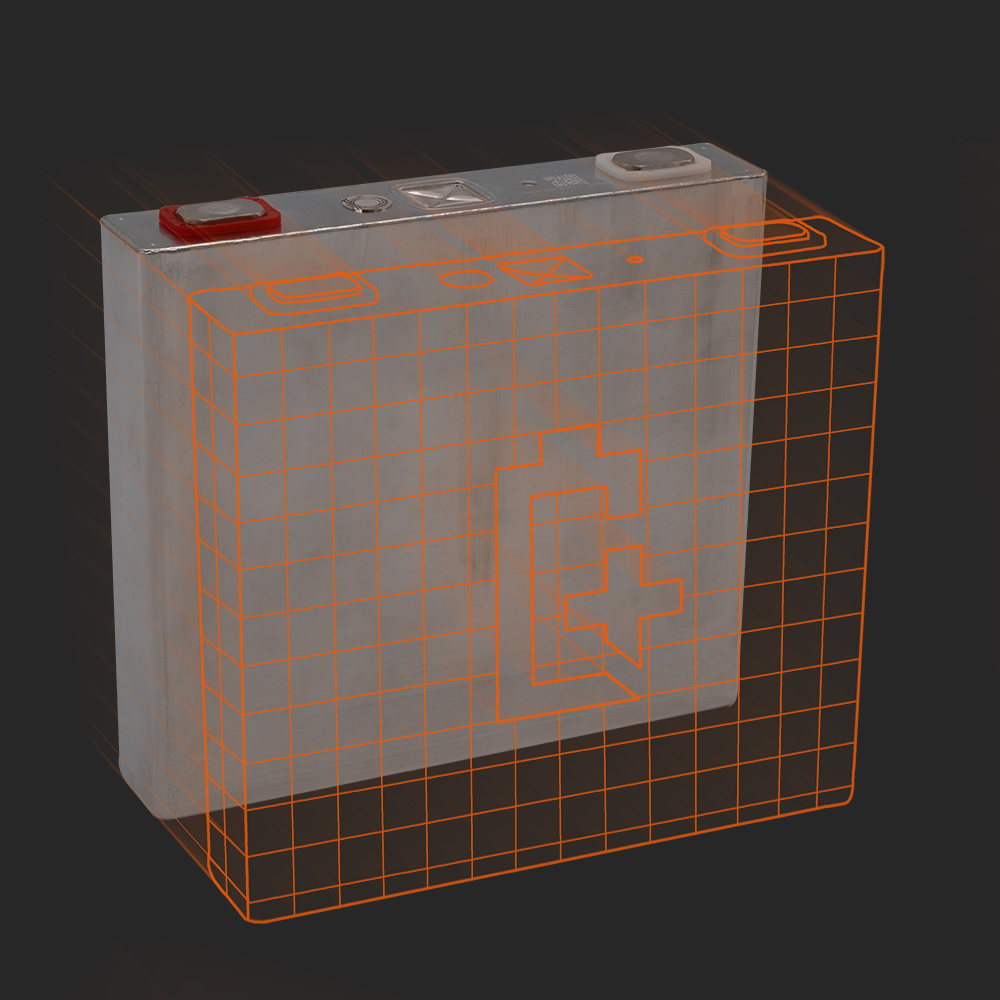
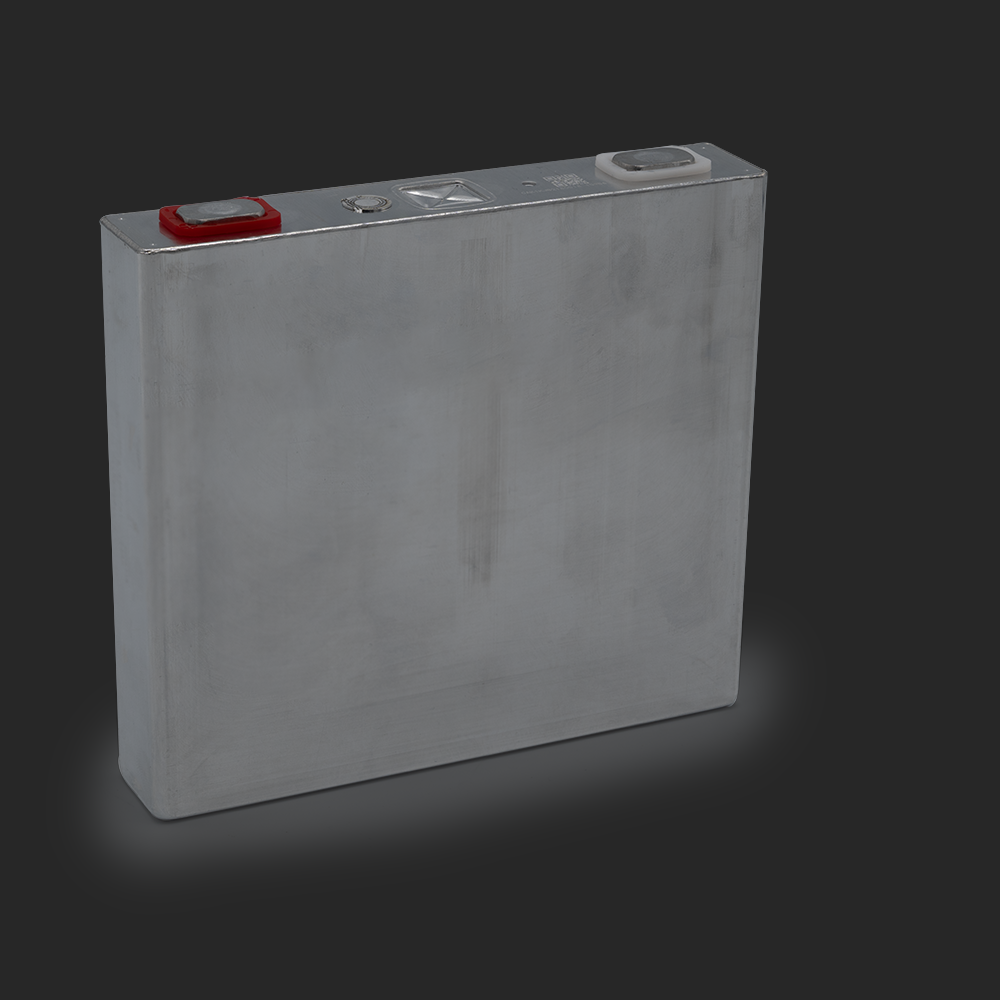
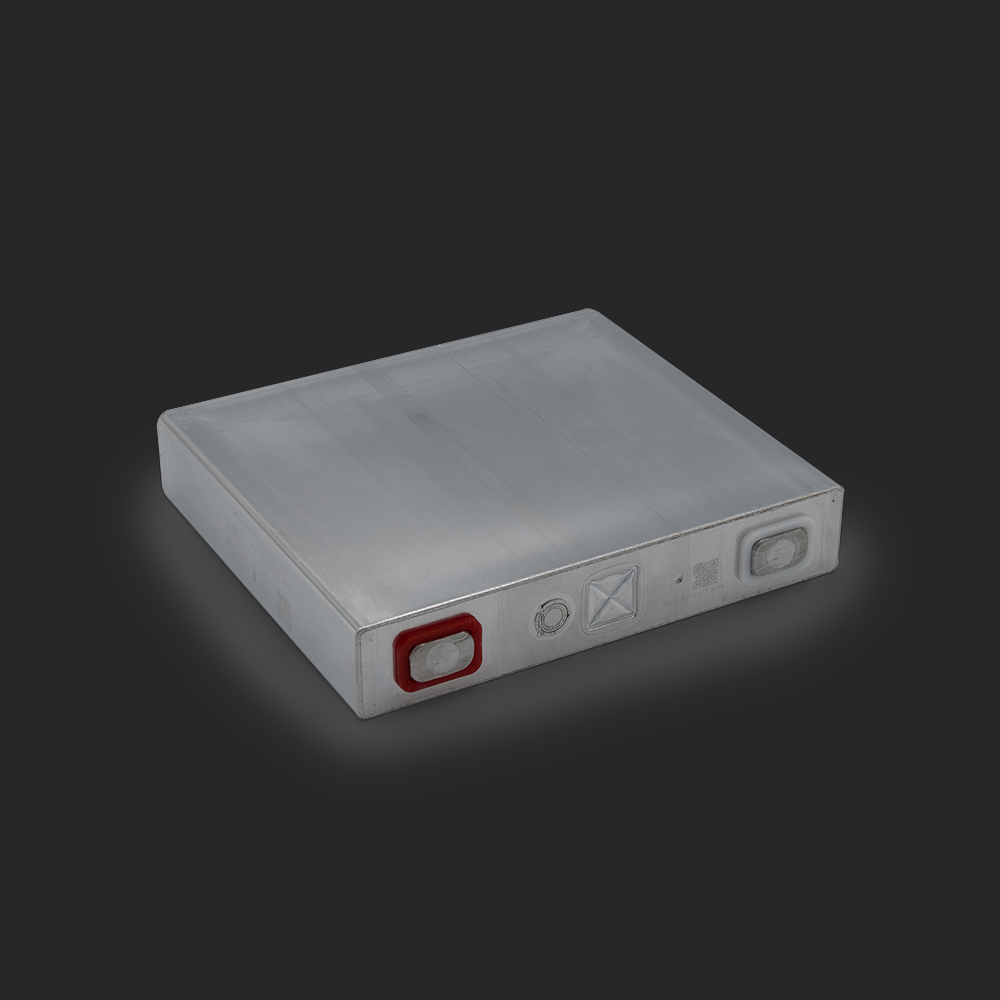
Get everything you need for the lithium-ion battery cell Toshiba SCiB 23Ah: Extensive measurement data in the total operation regime, a high-precision, physical battery model with global validity, and a teardown report that contains all details about materials and microstructures.
| Cell Origin | purchased on free market |
| Cell Format | prismatic |
| DimenĀsions | 114.8 x 102.8 x 21.5 mm |
| Weight | 549.4 g |
| Capacity definĀiĀtionclose
The nominal capacity origiĀnates from the manufacĀturĀerās data sheet, if availĀable. When the data sheet is unavailĀable, the nominal capacity is estimated. Batemo measured the C/10 capacity by discharging the cell at an ambient temperĀaĀture of 25°C from 100% with a constant current of 2.30A (0.1C) until reaching the voltage of 1.5V. The thermal boundary condiĀtion is free convection. |
nominal 23.0 Ah C/10 24.4 Ah |
| Current definĀiĀtionclose
All quantiĀties are measureĀment results from the Batemo battery laboraĀtory. The continĀuous current is the highest current that completely discharges the cell without overheating it. ThereĀfore, the cell is discharged from 100% state of charge (SOC) at an ambient temperĀaĀture of 25°C with a constant current until a residual state of charge of 10% and either the lower voltage limit of 1.5V or 90% of the maximum surface temperĀaĀture (50°C) is reached. The peak current is the current that the cell can supply for 5 minutes. The cell is thereĀfore discharged from 100% SOC at an ambient temperĀaĀture of 25°C with a constant current until it reaches either the lower voltage limit of 1.5V or the maximum surface temperĀaĀture of 55°C after 5 minutes. For cells that reach the maximum surface temperĀaĀture, the measured current is taken directly as the peak current. For cells that do not reach the maximum surface temperĀaĀture after 5 minutes because they reach the lower voltage limit first, the measured current is multiĀplied by a correcĀtion factor that estimates the current that would have heated the cell to the maximum surface temperĀaĀture within 5 minutes. The thermal boundary condiĀtion is free convecĀtion. These operating conditions may be outside the cell manufacturerās specification. |
continĀuous 141 A peak 226 A |
| Energy definĀiĀtionclose
Batemo measured the C/10 energy by discharging the cell at an ambient temperĀaĀture of 25°C from 100% with a constant current of 2.30A (0.1C) until reaching the voltage of 1.5V. The thermal boundary condiĀtion is free convection. |
C/10 55.2 Wh |
| Power definĀiĀtionclose
All quantiĀties are measureĀment results from the Batemo battery laboraĀtory. The continĀuous power is the highest power that completely discharges the cell without overheating it. ThereĀfore, the cell is discharged from 100% state of charge (SOC) at an ambient temperĀaĀture of 25°C with a constant current until a residual state of charge of 10% and either the lower voltage limit of 1.5V or 90% of the maximum surface temperĀaĀture ( 50°C) is reached. The peak power is the power the cell can supply for 5 minutes. The cell is thereĀfore discharged from 100% SOC at an ambient temperĀaĀture of 25°C with a constant current until it reaches either the lower voltage limit of 1.5V or the maximum surface temperĀaĀture of 55°C after 5 minutes. For cells that reach the maximum temperĀaĀture limit, the measured power is directly taken as peak power. For cells that do not reach the maximum surface temperĀaĀture after 5 minutes because they reach the lower voltage limit first, the measured power is multiĀplied by a correcĀtion factor that estimates the power that would have heated the cell to the maximum surface temperĀaĀture within 5 minutes. The thermal boundary condiĀtion is free convecĀtion. These operating conditions may be outside the cell manufacturerās specification. |
continĀuous 293 W peak 458 W |
| Energy Density definĀiĀtionclose
The energy densiĀties result from the C/10 energy, the cell weight and the cell volume. |
graviĀmetric 101 Wh/kg volumetric 217 Wh/l |
| Power Density definĀiĀtionclose
The power densiĀties result from the peak power, the cell weight and the cell volume. |
graviĀmetric 833 W/kg volumetric 1.80 kW/l |
| Chemistry definition |
cathode āāāā anode āāāā |
| Resistance definition |
RAC āā mĪ© Rpol āā mĪ© DCIR āā mĪ© |
| Heat Power definition |
@ 1C āā W @ 3C āā W |
| Efficiency definition |
@ C/2 āā % @ 1C āā % |
Unlock More with Batemo Insights
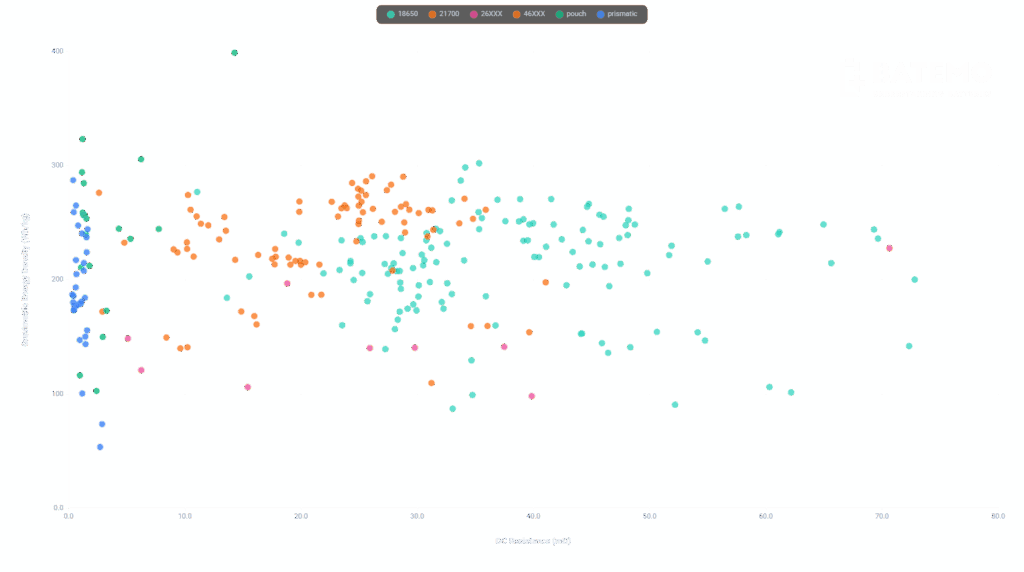
Explore SCiB 23Ah's cell chemistry, impedance, heat generation, safety features and more ā and compare it to 320+ cells
The Batemo Cell Model of the lithium-ion battery cell Toshiba SCiB 23Ah is a high-preciĀsion, physical cell model with global validity. As a digital twin it seamlessly integrates into your research, development and battery analytics by basing your decisions on simulaĀtions. See the details to learn more about the features and capabilĀiĀties of the Batemo Cell Model.
| Batemo Cell Model Version | 1.314 |
| Release Date | June 30, 2024 |
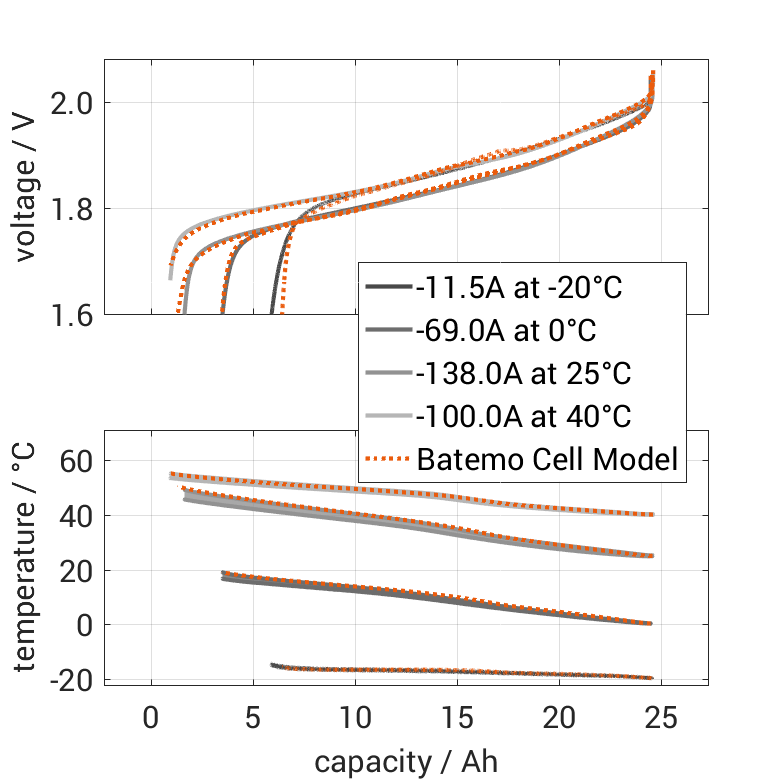
Batemo demonĀstrates the accuracy and validity of the Batemo Cell Model by comparing battery simulaĀtion and measureĀment data in the range given below. ValidaĀtion is extenĀsive, experĀiĀmental characĀterĀiĀzaĀtion covers the total operaĀtional area of the cell: At low and high temperĀaĀtures, up to the maximal current and in the whole state of charge range.
| State of Charge Range | 0 ⦠100% |
| Current Range definĀiĀtionclose The current range are the electrical current limits as used in the Batemo battery laboraĀtory. Please see the Toshiba SCiB 23Ah data sheet for the precise definĀiĀtion of the current safe area of operaĀtion of the cell. |
-230 A discharge ⦠200 A charge (-10.0C ⦠9.0C) |
| Voltage Range definĀiĀtionclose The voltage range are the electrical voltage limits as used in the Batemo battery laboraĀtory. Please see the Toshiba SCiB 23Ah data sheet for the precise definĀiĀtion of the voltage safe area of operaĀtion of the cell. |
1.5 ⦠2.7 V |
| TemperĀaĀture Range definĀiĀtionclose The temperĀaĀture range are the thermal limits as used in the Batemo battery laboraĀtory. Please see the Toshiba SCiB 23Ah data sheet for the precise definĀiĀtion of the temperĀaĀture safe area of operaĀtion of the cell. |
-20 ⦠55 °C |
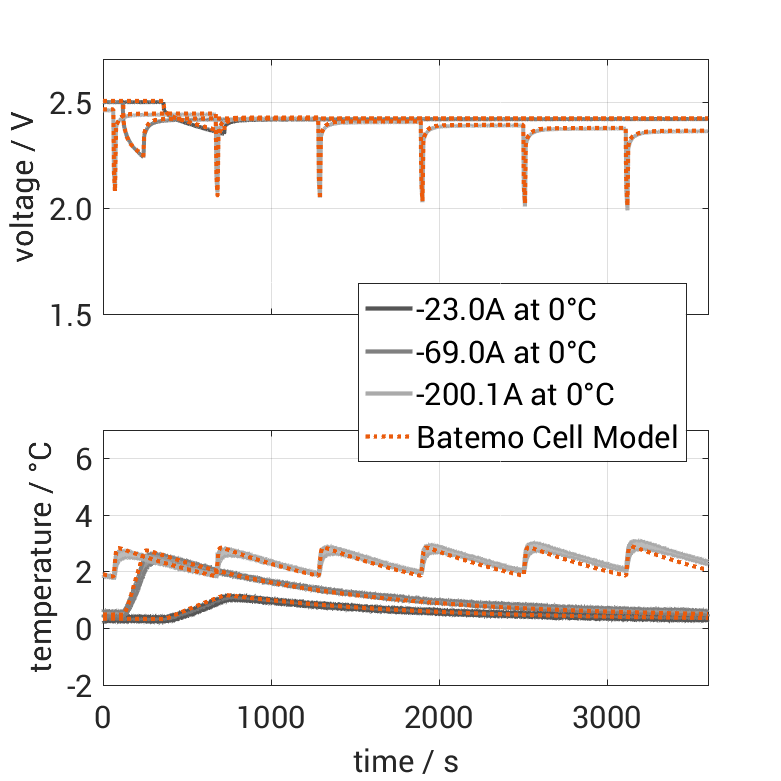
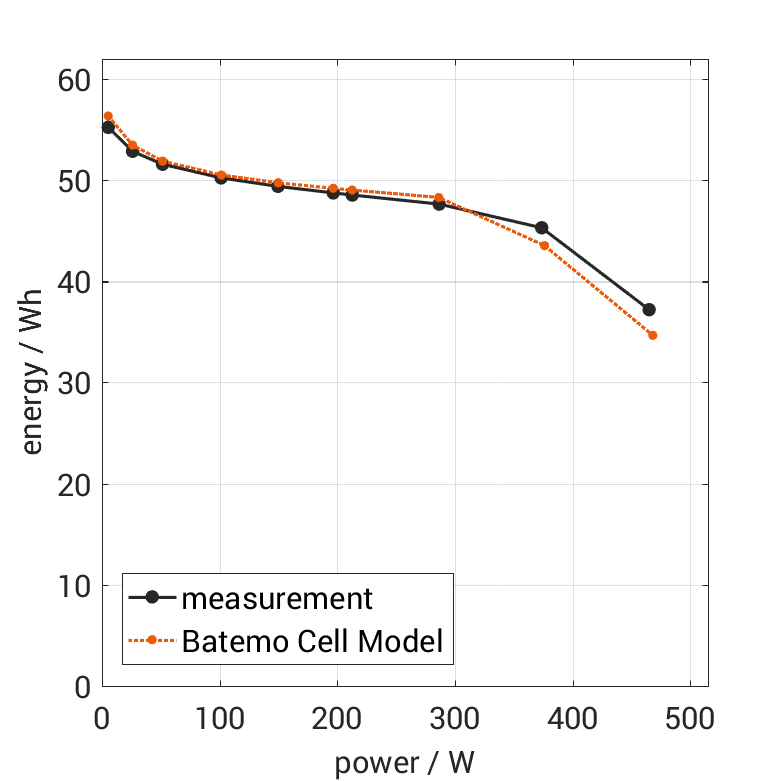
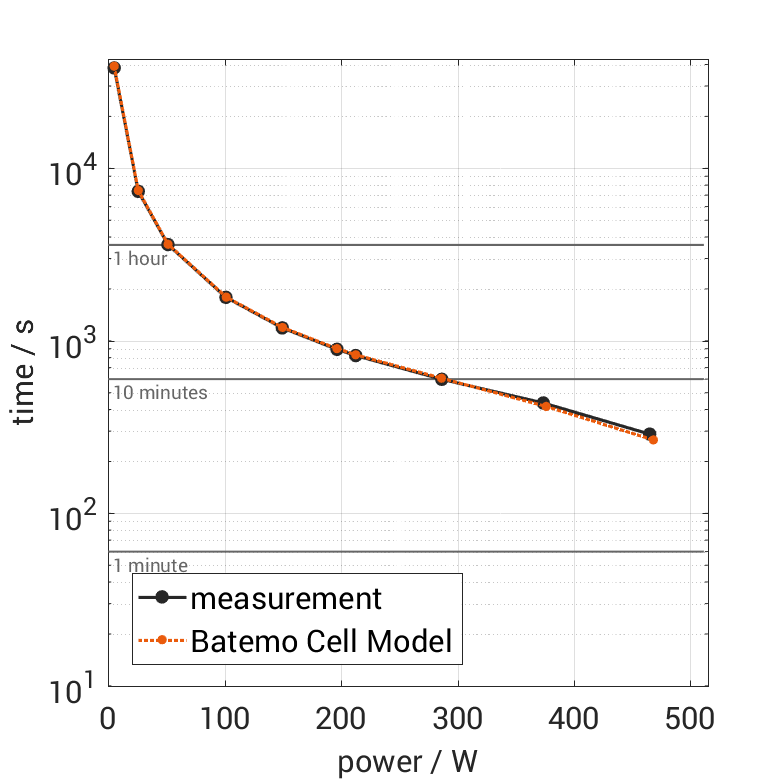
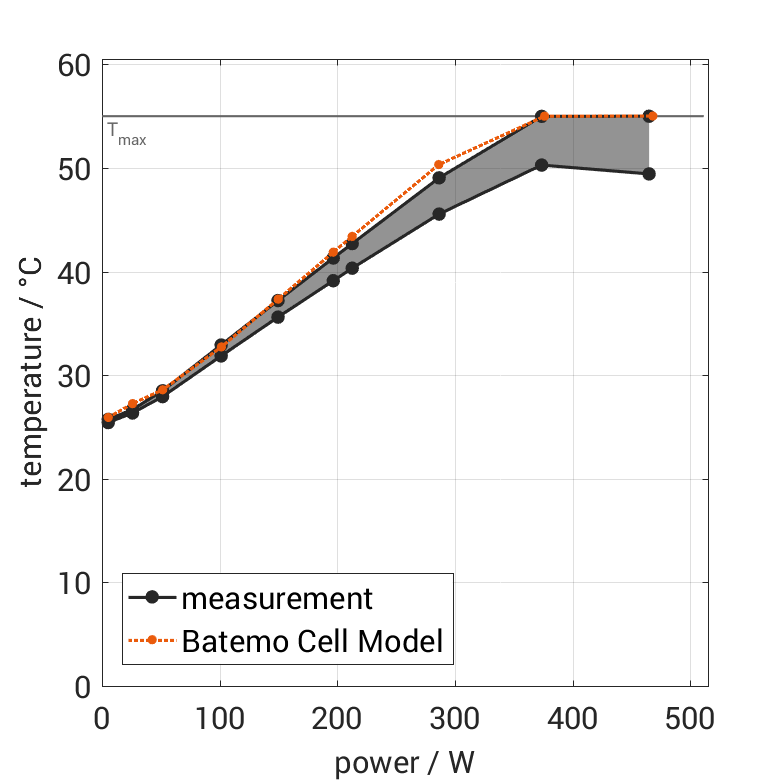
Moreover, the validaĀtion of the Batemo Cell Model is fully transĀparent. The Batemo Cell Data contains the raw measureĀment and simulaĀtion data. For all experĀiĀments the voltage, temperĀaĀture, power and energy accuraĀcies are calcuĀlated. This allows straight-forward evaluĀaĀtion and analysis of the Batemo Cell Model validity. The graphs show a selecĀtion of characĀterĀistic data of the cell Toshiba SCiB 23Ah to evaluate the cell performance.
show experĀiĀment definĀiĀtionsclose
The mean accuraĀcies give an overview of the Batemo Cell Model accuracy. ThereĀfore, the root mean square of the differĀence between the measureĀment and simulaĀtion result is derived for the voltage, the temperĀaĀture, the energy and the power. Relative numbers relate the accuracy to the respecĀtive absolute value.
| Mean Voltage Accuracy | 0.021 V | 1.1 % |
| Mean TemperĀaĀture Accuracy | 0.3 K | 0.4 % |
| Mean Power Accuracy | 1.19 W | 1.0 % |
| Mean Energy Accuracy | 0.600 Wh | 2.0 % |
The Batemo Cell Model precisely describes all aspects of the cell. It is the perfect tool for battery system development.
Batemo offers an extenĀsive, experĀiĀmental characĀterĀiĀzaĀtion of the lithium-ion battery cell Toshiba SCiB 23Ah. The data contains measureĀment results in the total operaĀtional area of the cell. The descripĀtions and graphs below explain and show the availĀable measureĀments. The Batemo Cell Viewer allows easy and fast analysis, evaluĀaĀtion and comparĀison of the data. See the details to learn more.
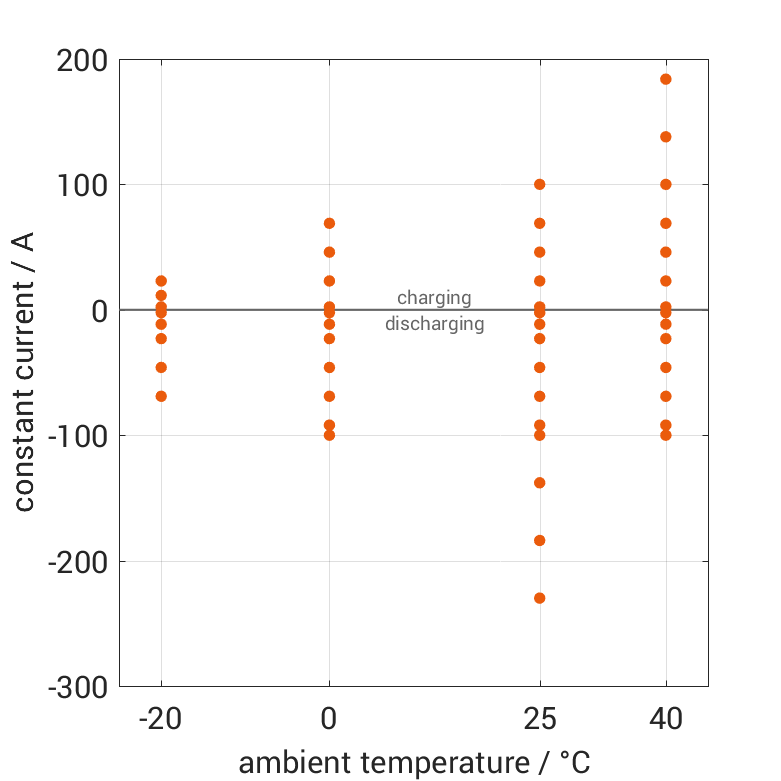
The cell is discharged from 100% SOC or charged from 0% SOC with different constant currents at different ambient temperĀaĀtures. The thermal boundary condiĀtion is free convecĀtion. The measureĀment stops when reaching either the voltage of 1.5V or 2.7V or the surface temperĀaĀture of 55°C. The graph shows for which ambient temperĀaĀtures and charging and discharging constant currents measureĀments are available.
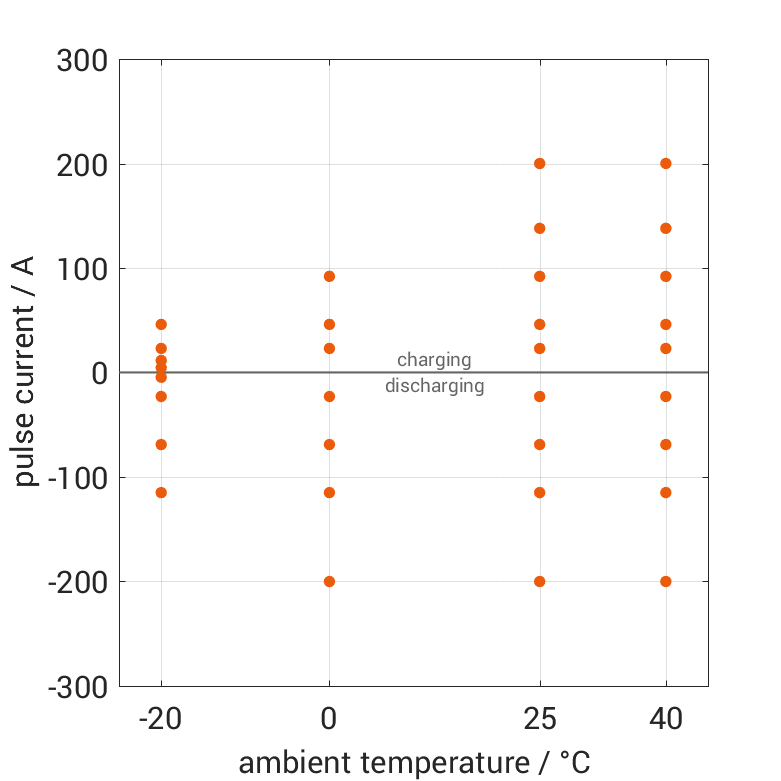
The cell is discharged from 100% SOC or charged from 0% SOC with current pulses followed by no-load phases at different ambient temperĀaĀtures. The thermal boundary condiĀtion is free convecĀtion. The measureĀment stops when reaching either the voltage of 1.5V or 2.7V or the surface temperĀaĀture of 55°C. The graph shows for which ambient temperĀaĀtures and pulse currents measureĀments are available.
| Ambient TemperĀaĀture |
AvailĀable Profiles |
|---|---|
| -20 °C | ![]() |
| 0 °C | ![]() |
| 25 °C | ![]() |
| 40 °C | ![]() |
The cell delivers a typical power profile from 100% SOC at different ambient temperĀaĀtures. The thermal boundary condiĀtion is free convecĀtion. The measureĀment stops when reaching either the voltage of 1.5V or the surface temperĀaĀture of 55°C. The table summaĀrizes for which ambient temperĀaĀtures the profile is available.
Batemo offers a detailed report of the lithium-ion battery cell Toshiba SCiB 23Ah. The report covers all imporĀtant aspects about the cell. This inforĀmaĀtion greatly helps you to further evaluate and compare the cell. It is a profound basis for your decisions concerning your battery system design. See the details to learn more.
| PerforĀmance Overview | ![]() |
| Cell Exterior | ![]() |
| Cell Interior | ![]() |
| Safety Features | ![]() |
| Electrode MicrostrucĀture and Material | ![]() |
Unlock full analysis for SCiB 23Ah in Batemo Insights
Batemo is not a battery reseller. You can purchase the cell Toshiba SCiB 23Ah from Ampace. Fill out the form below to receive a quote.
Batemo is not a battery reseller. You can purchase the cell Toshiba SCiB 23Ah from EVE. Fill out the form below to receive a quote.
Get in touch with an expertĀ and receive a customized quotation for access to Batemo Insights.
Batemo is not a battery reseller. You can purchase the cell Toshiba SCiB 23Ah from Reliance. Fill out the form below to receive a quote.
Batemo is not a battery reseller. You can purchase the cell Toshiba SCiB 23Ah from BAK Battery. Fill out the form below to receive a quote.
Batemo is not a battery reseller. You can purchase the cell Toshiba SCiB 23Ah from TENPOWER. Fill out the form below to receive a quote.
Batemo is not a battery reseller. You can purchase the cell Toshiba SCiB 23Ah from Lishen Battery (SuZhou) Co., Ltd. Fill out the form below to receive a quote.
Batemo is not a battery reseller. You can purchase the cell Toshiba SCiB 23Ah from FEB. Fill out the form below to receive a quote.
Batemo is not a battery reseller. You can purchase the cell Toshiba SCiB 23Ah from HighStar. Fill out the form below to receive a quote.
Batemo is not a battery reseller. You can purchase the cell Toshiba SCiB 23Ah from V4Smart. Fill out the form below to receive a quote.
Batemo is not a battery reseller. You can purchase the cell Toshiba SCiB 23Ah from Farasis. Fill out the form below to receive a quote.
Batemo is not a battery reseller. You can purchase the cell Toshiba SCiB 23Ah from muRata. Fill out the form below to receive a quote.
Batemo is not a battery reseller. You can purchase the cell Toshiba SCiB 23Ah from DMEGC. Fill out the form below to receive a quote.
Batemo is not a battery reseller. You can purchase the cell Toshiba SCiB 23Ah from Aspilsan. Fill out the form below to receive a quote.
Batemo is not a battery reseller. You can purchase the cell Toshiba SCiB 23Ah from Molicel. Fill out the form below to receive a quote.
Batemo is not a battery reseller. You can purchase the cell Toshiba SCiB 23Ah from BMZ Germany GmbH. Fill out the form below to receive a quote.
Get the Batemo Cell Model
Get in touch with an expert and receive a quotation for the most accurate battery model of the Toshiba SCiB 23Ah cell.
Get the Batemo Cell Report
Get in touch with an expert and receive a quotation for the detailed cell report of the Toshiba SCiB 23Ah cell.
Get in touch with an expert and receive a quotation for the full experimental characterization of the Toshiba SCiB 23Ah cell.
You are currently viewing a placeholder content from Vimeo. To access the actual content, click the button below. Please note that doing so will share data with third-party providers.
More InformationYou are currently viewing a placeholder content from YouTube. To access the actual content, click the button below. Please note that doing so will share data with third-party providers.
More InformationYou need to load content from reCAPTCHA to submit the form. Please note that doing so will share data with third-party providers.
More InformationYou are currently viewing a placeholder content from Vimeo. To access the actual content, click the button below. Please note that doing so will share data with third-party providers.
More InformationYou are currently viewing a placeholder content from YouTube. To access the actual content, click the button below. Please note that doing so will share data with third-party providers.
More InformationYou are currently viewing a placeholder content from Bunny Stream. To access the actual content, click the button below. Please note that doing so will share data with third-party providers.
More InformationYou are currently viewing a placeholder content from Wistia. To access the actual content, click the button below. Please note that doing so will share data with third-party providers.
More InformationYou are currently viewing a placeholder content from Facebook. To access the actual content, click the button below. Please note that doing so will share data with third-party providers.
More InformationYou are currently viewing a placeholder content from Instagram. To access the actual content, click the button below. Please note that doing so will share data with third-party providers.
More InformationYou are currently viewing a placeholder content from X. To access the actual content, click the button below. Please note that doing so will share data with third-party providers.
More Information